
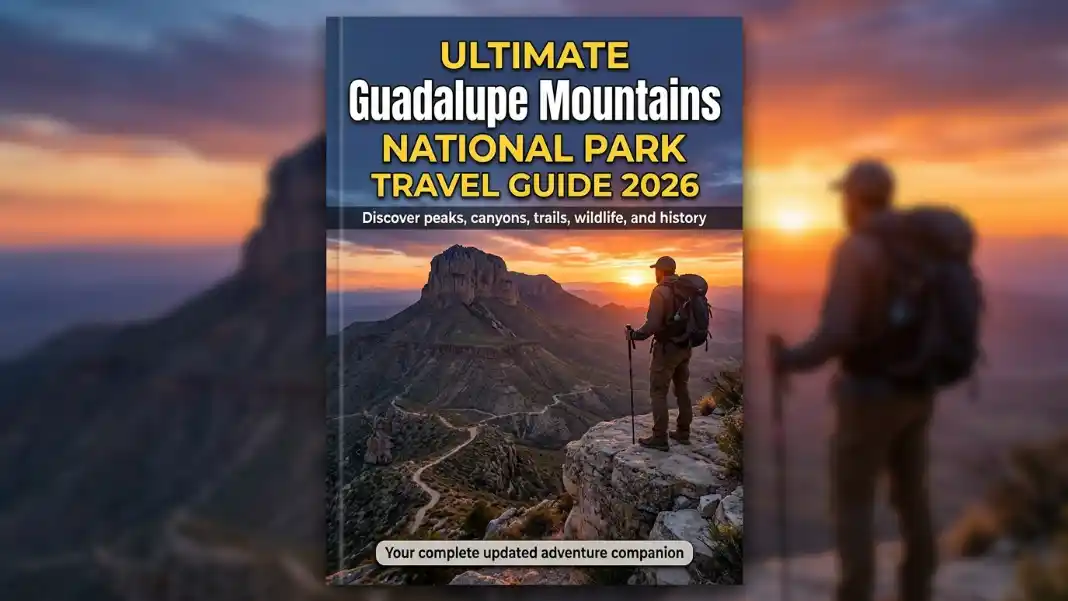
Ultimate Guadalupe Mountains National Park Travel Guide 2026
Guadalupe Mountains National Park is one of the most beautiful yet underrated national parks in the United States. Located in West Texas, this rugged landscape offers towering peaks, scenic canyons, desert views, and some of the best hiking trails in Texas. Whether you want to climb Guadalupe Peak, explore McKittrick Canyon, enjoy stargazing, or discover hidden desert landscapes, this park offers an unforgettable outdoor experience.
Many travelers visit famous parks like Yellowstone or the Grand Canyon, but Guadalupe Mountains National Park provides a quieter and more authentic adventure. Home to the highest point in Texas, the park attracts hikers, photographers, campers, and nature lovers looking for incredible scenery without large crowds.
In this complete Guadalupe Mountains National Park travel guide, you’ll discover the best things to do in Guadalupe Mountains National Park, top hiking trails, camping options, seasonal travel tips, wildlife viewing opportunities, and practical advice for planning the perfect trip. Whether you’re planning a quick weekend getaway or a longer adventure, this guide will help you make the most of your visit.
Quick Answer
Guadalupe Mountains National Park is located in West Texas near the New Mexico border. The park is known for Guadalupe Peak, the highest point in Texas, scenic hiking trails, desert landscapes, and McKittrick Canyon. The best things to do include hiking, camping, wildlife watching, and stargazing. Spring and fall offer the most pleasant weather. Most visitors spend one to three days exploring the park’s top attractions.
Why Visit Guadalupe Mountains National Park?
Guadalupe Mountains National Park offers a unique mix of rugged mountains, dramatic desert scenery, and unforgettable outdoor adventures. Unlike many crowded national parks, this destination provides a peaceful experience where visitors can connect with nature and enjoy some of the best hiking in Texas. The park features towering peaks, deep canyons, diverse wildlife, and one of the world’s most significant fossil reefs. Whether you want to tackle challenging trails, enjoy scenic photography, or simply escape busy tourist areas, this park delivers a memorable experience. Its natural beauty and quiet atmosphere make it a favorite destination for outdoor enthusiasts.
What Makes Guadalupe Mountains National Park Unique?
Several features set Guadalupe Mountains National Park apart from other national parks. The park protects the world’s most extensive exposed Permian fossil reef, offering a fascinating glimpse into Earth’s ancient history. Visitors can explore mountain forests, desert valleys, and colorful canyons within a single trip. The park’s diverse ecosystems support a wide variety of plant and animal species, creating excellent opportunities for wildlife viewing. Unlike many popular parks, Guadalupe Mountains remains relatively uncrowded, allowing visitors to enjoy a more peaceful experience. This combination of geology, biodiversity, and stunning scenery makes the park truly special.
Home to the Highest Point in Texas
One of the park’s biggest attractions is Guadalupe Peak, which rises to 8,751 feet and stands as the highest point in Texas. Thousands of visitors hike the famous Guadalupe Peak Trail each year to reach the summit and enjoy breathtaking panoramic views. The challenging trail rewards hikers with sweeping vistas of the surrounding mountains and the vast Chihuahuan Desert. Reaching the summit is considered one of the most memorable outdoor experiences in Texas. For many travelers, standing at the top of Texas becomes the highlight of their visit to Guadalupe Mountains National Park.
One of America’s Most Underrated National Parks
Despite its incredible landscapes and outdoor opportunities, Guadalupe Mountains National Park remains one of the most underrated national parks in the United States. Many travelers focus on larger parks and overlook this hidden gem in West Texas. As a result, visitors often enjoy quieter trails, less crowded campgrounds, and a more relaxing atmosphere. The park offers everything from mountain hiking and wildlife watching to photography and stargazing. Travelers who visit often discover that its peaceful environment and natural beauty rival some of the country’s most famous destinations.
Why It’s Worth Adding to Your Bucket List
If you enjoy hiking, nature, and adventure, Guadalupe Mountains National Park deserves a place on your travel bucket list. The park combines stunning mountain scenery, fascinating geological features, and unforgettable outdoor experiences. Visitors can hike to the highest point in Texas, explore McKittrick Canyon, discover hidden trails, and camp beneath some of the darkest skies in the region. The park also offers opportunities for photography, wildlife observation, and backcountry exploration. Whether you are planning a weekend getaway or a longer road trip, this destination provides experiences that are both rewarding and memorable.
Guadalupe Mountains National Park at a Glance
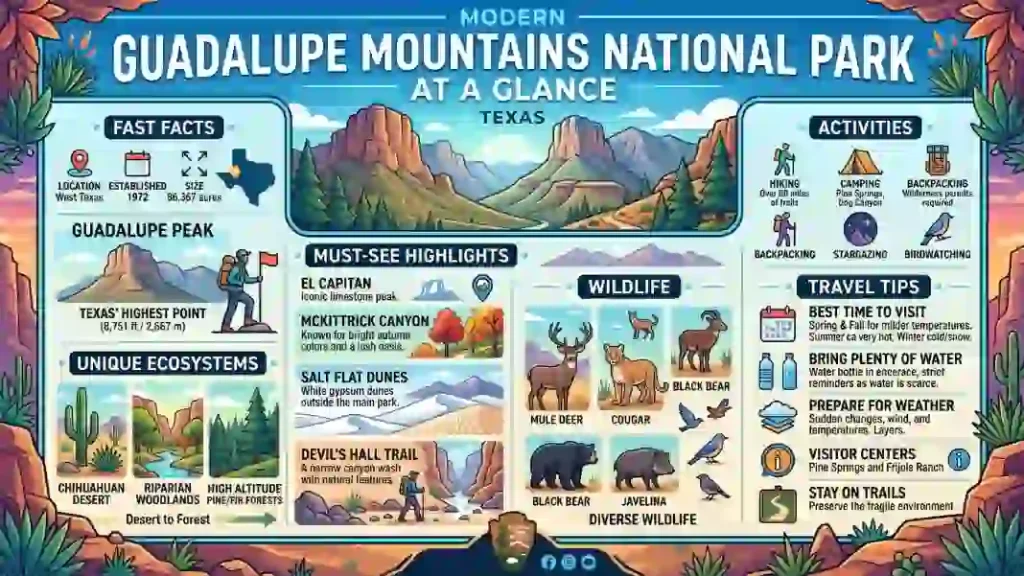
Before planning your visit, it helps to understand the park’s key details. Guadalupe Mountains National Park covers a large area of protected wilderness in West Texas and offers a wide range of outdoor activities. From hiking and camping to photography and wildlife viewing, the park appeals to many types of travelers. Visitors can access several trailheads, campgrounds, and visitor facilities throughout the park. Knowing important information about location, fees, operating hours, and available resources can help you plan a smoother and more enjoyable trip.
Location
Guadalupe Mountains National Park sits in West Texas, close to the border of New Mexico. The park lies within Culberson County and Hudspeth County and is easily accessible by road. It is approximately 110 miles east of El Paso and only a short drive from Carlsbad Caverns National Park in neighboring New Mexico. Its location makes it a popular stop on Southwest road trips. The surrounding landscape features dramatic mountain ranges, open desert plains, and stunning natural scenery that attracts visitors throughout the year.
Size and Elevation
The park covers more than 86,000 acres of protected wilderness and contains some of the most impressive mountain landscapes in Texas. Elevation varies significantly throughout the park, ranging from desert lowlands to the summit of Guadalupe Peak at 8,751 feet. This variation creates diverse ecosystems and supports a wide range of plant and animal life. Visitors can experience desert environments, wooded mountain slopes, and scenic canyons during a single trip. The park’s elevation changes also contribute to cooler temperatures in higher areas, especially during spring and fall.
Park Entrance Fees
Visitors must pay an entrance fee to access Guadalupe Mountains National Park. Entrance passes are available for individuals, private vehicles, and annual park access. Travelers who frequently visit national parks may benefit from purchasing the America the Beautiful Pass, which provides entry to many federal recreation sites across the United States. Entrance fees help support park maintenance, visitor services, and conservation efforts. Before traveling, visitors should check current fee information because rates and policies may change over time.
Visitor Centers
The park operates visitor facilities that provide helpful information for travelers. The Pine Springs Visitor Center serves as the main visitor center and offers maps, trail information, exhibits, and ranger assistance. Visitors can learn about hiking conditions, weather forecasts, wildlife activity, and park safety before beginning their adventures. Staff members are available to answer questions and recommend trails based on experience levels. Stopping at a visitor center before exploring the park can help travelers make informed decisions and enjoy a safer experience.
Operating Hours
Guadalupe Mountains National Park remains open throughout the year, allowing visitors to explore during every season. While the park itself generally stays accessible daily, visitor center hours may vary depending on the season and staffing levels. Weather conditions can occasionally affect trail access and visitor services, particularly during periods of high winds or severe storms. Travelers should review current operating information before arriving. Planning ahead helps ensure access to visitor facilities, hiking trails, and other park resources during your trip.
Official Maps and Resources
Using official maps and visitor resources can make your trip more enjoyable and efficient. Park maps help visitors locate hiking trails, campgrounds, scenic viewpoints, visitor centers, and important services. Trail guides provide useful information about distances, elevation gains, and difficulty levels, helping hikers choose routes that match their abilities. Visitors can also access current weather forecasts, safety information, and educational materials before and during their visit. Reviewing these resources in advance can improve trip planning and help travelers make the most of their time in Guadalupe Mountains National Park.
Where Is Guadalupe Mountains National Park?
Guadalupe Mountains National Park is located in the remote region of West Texas, near the border of New Mexico. The park protects a spectacular section of the Guadalupe Mountains, which rise dramatically above the surrounding Chihuahuan Desert. Its location offers visitors a peaceful escape from busy cities and crowded tourist destinations. Many travelers combine their visit with nearby attractions such as Carlsbad Caverns National Park and other Southwest road trip destinations. Understanding the park’s location, transportation options, and nearby travel routes can help you plan a smooth and enjoyable visit.
Map and Location
The park sits in western Texas along U.S. Highway 62/180, approximately 35 miles southwest of Carlsbad, New Mexico. It stretches across portions of Culberson County and Hudspeth County and includes rugged mountain landscapes, desert valleys, and scenic canyons. The main entrance is located near the Pine Springs Visitor Center, which serves as the primary starting point for many hiking adventures. Its location within the Chihuahuan Desert creates a unique blend of mountain and desert ecosystems, making the park one of the most distinctive natural destinations in Texas.
Nearest Cities
Although the park sits in a remote area, several cities provide convenient access. Carlsbad, New Mexico, is the closest major city and offers hotels, restaurants, and visitor services. El Paso, Texas, serves as the largest nearby urban center and provides additional travel amenities. Other nearby communities include Van Horn, Dell City, and Whites City. Many visitors stay in these locations before exploring the park. Choosing accommodations in nearby cities can provide greater flexibility, especially during busy travel seasons when lodging options close to the park may be limited.
Nearest Airports
Travelers flying to Guadalupe Mountains National Park can choose from several regional airports. El Paso International Airport is the largest and most convenient option, offering numerous domestic flights and rental car services. Cavern City Air Terminal in Carlsbad provides a smaller regional alternative for visitors arriving from select destinations. Midland International Air and Space Port is another option for travelers exploring multiple West Texas attractions. Because public transportation is limited, renting a vehicle remains the most practical way to reach the park and explore nearby attractions.
Driving Directions
Most visitors reach the park by car using U.S. Highway 62/180, which passes directly by the main park entrance. Travelers coming from El Paso typically drive east before heading north toward the park. Visitors arriving from Carlsbad follow a scenic route south through the desert landscape. Clear road signs help guide travelers to the Pine Springs Visitor Center and other key areas. Since services can be limited in this remote region, drivers should fuel their vehicles and stock up on supplies before entering the park.
Road Trip Routes
Guadalupe Mountains National Park fits perfectly into a Southwest road trip itinerary. Many travelers combine the park with Carlsbad Caverns National Park, creating a memorable adventure filled with caves, mountains, and desert scenery. Others include stops at White Sands National Park, Big Bend National Park, or El Paso. These routes allow visitors to experience some of the most remarkable landscapes in Texas and New Mexico. Planning a road trip also gives travelers the freedom to explore hidden gems, scenic viewpoints, and lesser-known attractions along the way.
Best Things to Do in Guadalupe Mountains National Park
Visitors will find no shortage of outdoor adventures in Guadalupe Mountains National Park. The park offers a variety of experiences, including challenging hikes, scenic drives, wildlife encounters, historical attractions, and incredible photography opportunities. Whether you are visiting for a day or planning a longer stay, you can explore some of Texas’ most beautiful natural landscapes. From climbing Guadalupe Peak to discovering quiet desert trails, every activity provides a unique perspective on the park’s diverse environment and rich history.
Hike Guadalupe Peak
Climbing Guadalupe Peak ranks among the most popular things to do in the park. This iconic hike leads visitors to the highest point in Texas, standing at 8,751 feet above sea level. The trail offers stunning mountain views, challenging elevation gains, and rewarding summit scenery. Along the route, hikers pass through diverse ecosystems that showcase the beauty of the Guadalupe Mountains. Reaching the summit provides a sense of accomplishment and an unforgettable view across the surrounding desert and mountain ranges.
Explore McKittrick Canyon
McKittrick Canyon is one of the park’s most beautiful and diverse areas. Known for its seasonal fall colors, the canyon attracts hikers, photographers, and nature lovers throughout the year. The trail follows a scenic path lined with trees, rocky cliffs, and flowing seasonal streams. Visitors can enjoy peaceful walks while observing wildlife and native plants. The canyon’s unique environment contrasts sharply with the surrounding desert, making it one of the most memorable locations within Guadalupe Mountains National Park.
Walk Through Devil’s Hall
The Devil’s Hall Trail offers one of the park’s most unique hiking experiences. This moderately challenging route takes visitors through a rocky wash and narrow canyon before reaching the impressive natural rock formation known as Devil’s Hall. Along the way, hikers navigate stone steps, boulder fields, and dramatic canyon walls. The trail combines adventure with beautiful scenery, making it a favorite among first-time visitors. Many travelers consider this hike one of the most rewarding short adventures in the park.
Visit Salt Basin Dunes
The Salt Basin Dunes provide a striking contrast to the park’s mountain landscapes. These bright white dunes stretch across the desert floor and create one of the most unusual environments in West Texas. Visitors can walk among the dunes, enjoy panoramic views, and capture unique photographs. Early morning and late afternoon often provide the best lighting conditions. The area remains less crowded than many other park attractions, allowing visitors to experience the desert’s peaceful beauty at their own pace.
See El Capitan
El Capitan is one of the most recognizable landmarks in the Guadalupe Mountains. This towering limestone formation rises dramatically above the desert and serves as a natural symbol of the region. Travelers can view El Capitan from scenic overlooks, hiking trails, and nearby highways. Photographers especially appreciate its distinctive shape during sunrise and sunset. The mountain has guided travelers through the region for centuries and remains one of the most iconic features of Guadalupe Mountains National Park.
Discover Frijole Ranch History Museum
The Frijole Ranch History Museum offers visitors a glimpse into the area’s cultural and historical past. The restored ranch house contains exhibits that explain the lives of early settlers and ranching families who once lived in the region. Visitors can learn about local history while exploring the surrounding grounds. The museum adds an educational element to any trip and helps travelers better understand the human stories connected to the landscape. It also serves as a convenient stop between hiking adventures.
Explore Dog Canyon
Located in the northern section of the park, Dog Canyon provides a quieter alternative to the more popular areas. The canyon features beautiful mountain scenery, excellent hiking opportunities, and a peaceful campground. Visitors often encounter fewer crowds, making it ideal for those seeking solitude and nature. Several trails begin from this area and lead through forests, canyons, and scenic overlooks. Dog Canyon offers a different perspective on the park and rewards visitors with a more secluded outdoor experience.
Enjoy Stargazing
The park’s remote location and limited light pollution make it one of the best places for stargazing in Texas. On clear nights, visitors can view thousands of stars, bright planets, and the Milky Way stretching across the sky. Many photographers visit specifically to capture stunning night sky images. Stargazing opportunities exist throughout the park, particularly near campgrounds and open viewpoints. Bringing a telescope or binoculars can enhance the experience, but even casual observers will enjoy the spectacular night skies.
Wildlife Watching
Wildlife watching is another rewarding activity in Guadalupe Mountains National Park. The park supports a variety of animals, including mule deer, elk, coyotes, foxes, and numerous bird species. Early mornings and evenings often provide the best opportunities for sightings. Visitors exploring trails and canyon areas may encounter wildlife in their natural habitats. Respecting wildlife from a safe distance helps protect both animals and visitors while creating a more enjoyable experience for everyone.
Scenic Photography
Photographers will find endless opportunities throughout the park. Towering mountains, dramatic desert landscapes, colorful canyons, and expansive night skies create ideal conditions for landscape photography. Popular locations include Guadalupe Peak, McKittrick Canyon, Salt Basin Dunes, and El Capitan. Sunrise and sunset often produce the most dramatic lighting conditions. Whether you use a professional camera or a smartphone, the park’s natural beauty makes it easy to capture memorable images.
Best Hikes in Guadalupe Mountains National Park
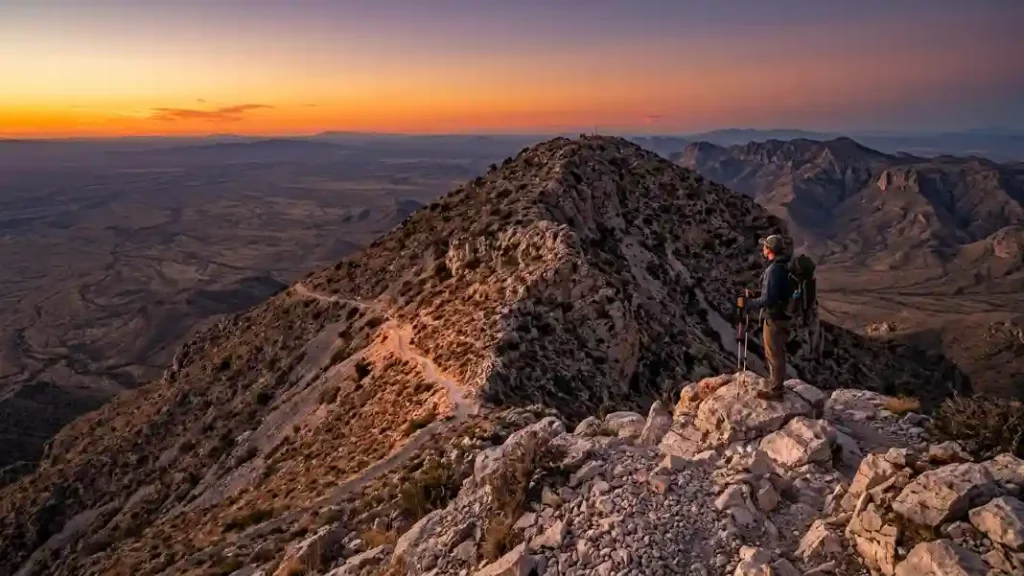
Hiking remains the most popular activity in Guadalupe Mountains National Park. The park features trails for every skill level, from easy nature walks to challenging mountain climbs. Visitors can explore desert landscapes, scenic canyons, forested slopes, and panoramic overlooks. Each trail offers unique scenery and opportunities to experience the park’s diverse ecosystems. Choosing the right hike depends on your fitness level, available time, and interests.
Guadalupe Peak Trail
The Guadalupe Peak Trail is the park’s signature hike and leads to the highest point in Texas. This challenging route covers approximately 8.4 miles round trip and gains more than 3,000 feet in elevation. Hikers enjoy spectacular views throughout the climb and receive an unforgettable reward at the summit. The trail requires preparation, water, and stamina, but many visitors consider it the highlight of their trip.
Devil’s Hall Trail
The Devil’s Hall Trail offers a moderate adventure with unique geological features. The route follows a rocky wash before leading hikers through narrow canyon walls and impressive rock formations. The final destination, Devil’s Hall, provides excellent photo opportunities and dramatic scenery. This trail delivers a rewarding experience without requiring the extreme effort of Guadalupe Peak.
McKittrick Canyon Trail
The McKittrick Canyon Trail showcases some of the park’s most beautiful scenery. Visitors enjoy colorful foliage, seasonal streams, and scenic canyon views along the route. The trail offers varying distances, allowing hikers to customize their experience. It is particularly popular during fall when vibrant colors transform the canyon into one of Texas’ most impressive natural attractions.
Smith Spring Trail
The Smith Spring Trail combines desert landscapes with a refreshing natural spring. This moderate hike takes visitors through varied terrain and provides opportunities to observe wildlife and native vegetation. The spring area creates a lush environment that contrasts beautifully with the surrounding desert. Many visitors appreciate the trail’s scenic diversity and manageable difficulty level.
The Bowl Trail
The Bowl Trail leads hikers into a forested mountain basin that feels surprisingly different from the surrounding desert. Tall trees, cooler temperatures, and peaceful surroundings create a unique hiking experience. This trail appeals to experienced hikers seeking a longer adventure and a chance to explore one of the park’s most distinctive ecosystems.
El Capitan Trail
The El Capitan Trail offers hikers a close look at one of the region’s most famous landmarks. The route features challenging terrain and rewarding views of the iconic mountain. While fewer visitors choose this trail compared to Guadalupe Peak, those who do often enjoy a quieter experience and impressive desert scenery.
Bear Canyon Trail
The Bear Canyon Trail provides access to remote areas of the park and offers excellent opportunities for solitude. Hikers pass through rugged terrain, scenic mountain landscapes, and diverse habitats. The trail rewards visitors with beautiful views while allowing them to experience a less-traveled section of the park.
Tejas Trail
The Tejas Trail connects several popular routes and provides access to different ecosystems throughout the park. Hikers can use it as part of longer backpacking adventures or shorter day hikes. The trail passes through forests, canyons, and mountain terrain while showcasing the park’s remarkable diversity.
Hiking Difficulty Comparison Table
| Trail | Distance | Difficulty | Time Needed |
| Guadalupe Peak Trail | 8.4 miles round trip | Difficult | 6–8 hours |
| Devil’s Hall Trail | 4.2 miles round trip | Moderate | 2–3 hours |
| McKittrick Canyon Trail | 4–10+ miles | Moderate | 2–6 hours |
| Smith Spring Trail | 2.3 miles loop | Easy to Moderate | 1–2 hours |
| The Bowl Trail | 9+ miles | Difficult | 5–7 hours |
| El Capitan Trail | 11+ miles round trip | Difficult | 7–9 hours |
| Bear Canyon Trail | Varies | Moderate to Difficult | 3–6 hours |
| Tejas Trail | Varies | Moderate | 2–6 hours |
Guadalupe Peak Trail Guide
The Guadalupe Peak Trail is the most famous hike in Guadalupe Mountains National Park and one of the top outdoor adventures in Texas. This challenging route takes hikers to the summit of Guadalupe Peak, the highest point in Texas. Along the way, visitors enjoy incredible mountain scenery, panoramic views, and a sense of accomplishment that few trails can match. While the hike requires preparation and endurance, the reward at the summit makes every step worthwhile. For many travelers, hiking Guadalupe Peak becomes the highlight of their entire Guadalupe Mountains National Park travel guide experience.
Trail Overview
The Guadalupe Peak Trail begins near the Pine Springs Visitor Center and follows a well-maintained path toward the summit. The trail winds through desert landscapes, rocky slopes, and mountain terrain before reaching the peak. Hikers encounter dramatic views throughout the journey, making the climb enjoyable despite its difficulty. The summit features a famous stainless-steel pyramid monument that marks the highest point in Texas. Many visitors plan their entire trip around completing this iconic hike because it represents one of the most rewarding experiences in Guadalupe Mountains National Park.
Distance and Elevation Gain
The trail covers approximately 8.4 miles round trip and gains more than 3,000 feet of elevation. Most hikers require between six and eight hours to complete the journey, depending on fitness levels and weather conditions. The steady climb challenges even experienced hikers, but the trail remains accessible to those who prepare properly. Bringing sufficient water, snacks, and appropriate hiking gear is essential. The combination of distance and elevation makes this one of the most demanding hikes in Texas, but the breathtaking summit views justify the effort.
Difficulty Level
The Guadalupe Peak Trail is generally considered difficult due to its steep elevation gain and long distance. Hikers need good physical fitness and should be prepared for changing weather conditions, especially strong winds near the summit. Beginners can complete the trail, but they should allow extra time and pace themselves carefully. The route does not require technical climbing skills, but endurance plays an important role. Those who prepare properly often find the challenge rewarding and memorable.
What to Expect on the Trail
Visitors can expect diverse scenery throughout the hike. The lower sections feature desert vegetation and rocky terrain, while higher elevations reveal cooler temperatures and different plant communities. As hikers gain elevation, sweeping views of the Chihuahuan Desert and surrounding mountains become increasingly impressive. Wildlife sightings are also possible along the route. The summit offers one of the most spectacular viewpoints in Texas, providing panoramic views that stretch for miles across the landscape.
Best Time to Hike Guadalupe Peak
Spring and fall are generally the best seasons for hiking Guadalupe Peak. During these months, temperatures remain comfortable, and weather conditions often support safer hiking. Summer can bring intense heat, while winter may introduce cold temperatures and strong winds at higher elevations. Early morning departures are recommended year-round because they allow hikers to avoid the hottest part of the day and provide more time to complete the trail. Checking weather forecasts before beginning the hike is always a smart decision.
Safety Tips for Reaching the Summit
Proper preparation can make your hike safer and more enjoyable. Carry plenty of water, wear sturdy hiking shoes, and dress in layers to handle changing temperatures. Strong winds are common near the summit, so bringing a wind-resistant jacket is helpful. Always stay on marked trails and monitor weather conditions throughout the day. Hikers should also inform someone about their plans before starting the hike. These simple precautions can help ensure a safe and successful journey to the top of Guadalupe Peak.
Hidden Gems Most Visitors Miss
While many travelers focus on popular attractions, Guadalupe Mountains National Park also contains several hidden gems worth exploring. These lesser-known locations offer beautiful scenery, fewer crowds, and unique opportunities to experience the park from a different perspective. Visitors who venture beyond the most famous trails often discover peaceful landscapes, impressive viewpoints, and memorable photography spots. Exploring these hidden treasures can make your trip feel more personal and rewarding while helping you experience parts of the park that many tourists overlook.
Williams Ranch
Williams Ranch is one of the most fascinating hidden destinations within the park. This historic ranch site offers visitors a glimpse into the region’s ranching heritage while providing access to scenic landscapes and quiet surroundings. Reaching the ranch requires additional planning, which helps keep visitor numbers low. Travelers who make the journey often enjoy solitude and beautiful desert scenery. The area combines history and nature, making it an excellent choice for visitors looking to explore beyond the park’s most popular attractions.
Lesser-Known Viewpoints
Several lesser-known viewpoints throughout the park offer stunning scenery without the crowds found at major attractions. These locations provide excellent opportunities to enjoy mountain landscapes, desert vistas, and peaceful surroundings. Visitors who take time to explore side trails and scenic overlooks often discover some of the park’s most memorable views. These hidden viewpoints are especially appealing for photographers and travelers seeking a quieter connection with nature.
Quiet Trails Away from Crowds
Many visitors concentrate on popular hikes such as Guadalupe Peak Trail and Devil’s Hall Trail, leaving several quieter routes largely unexplored. Trails in areas like Dog Canyon, Bear Canyon, and remote backcountry sections provide opportunities for solitude and wildlife observation. These paths allow hikers to enjoy the beauty of Guadalupe Mountains National Park without encountering large groups. Exploring less-traveled trails can create a more peaceful and immersive outdoor experience.
Secret Photography Locations
Photographers willing to explore beyond the main attractions can find incredible hidden locations throughout the park. Remote viewpoints, quiet canyon sections, and lesser-known desert landscapes often provide unique compositions that many visitors miss. Early morning and late evening light can transform these locations into spectacular photography opportunities. These hidden spots allow photographers to capture original images while experiencing a quieter side of the park that remains largely undiscovered.
Best Views in Guadalupe Mountains National Park
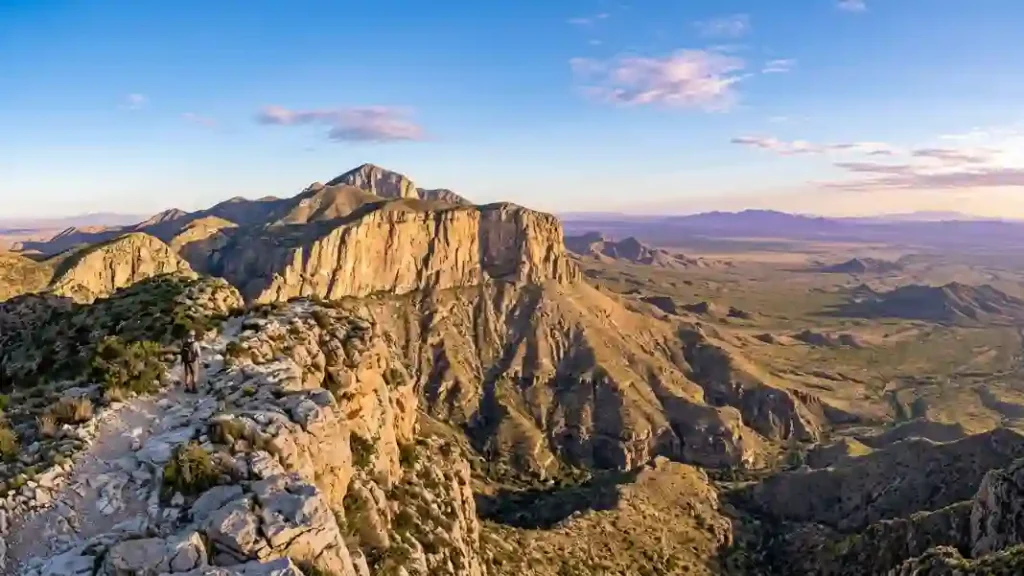
The dramatic landscapes of Guadalupe Mountains National Park provide some of the most impressive views in Texas. From towering mountain peaks to vast desert valleys, visitors can enjoy breathtaking scenery in every direction. Whether you are hiking, driving, or simply relaxing at a scenic overlook, the park offers countless opportunities to admire its natural beauty. Photographers, hikers, and nature lovers will all find memorable viewpoints throughout the park’s diverse landscapes.
Best Sunrise Spots
Sunrise creates some of the most beautiful lighting conditions in the park. Areas near Guadalupe Peak, elevated trail sections, and open desert viewpoints provide excellent locations for watching the first light of day. The soft morning colors illuminate the mountains and create dramatic contrasts across the landscape. Arriving early also allows visitors to enjoy cooler temperatures and fewer crowds. Many photographers consider sunrise the best time to capture the park’s natural beauty.
Best Sunset Spots
Sunset transforms the rugged mountains and desert landscapes into a display of warm colors and dramatic shadows. El Capitan is one of the most popular sunset viewing locations because the evening light highlights its distinctive shape. Open viewpoints throughout the park also provide excellent opportunities to watch the changing colors across the sky. Sunset remains one of the most rewarding experiences for visitors seeking memorable scenery and photography opportunities.
Mountain Views
The park’s mountain landscapes create unforgettable panoramas throughout the year. The summit of Guadalupe Peak offers the most famous mountain views, but many other trails also provide exceptional scenery. Hikers can enjoy sweeping vistas of the Guadalupe Mountains, surrounding desert basins, and distant ranges. These dramatic viewpoints showcase the rugged beauty that makes the park one of the top outdoor destinations in Texas.
Scenic Overlooks
Several scenic overlooks throughout the park provide accessible opportunities to enjoy incredible views without completing long hikes. These locations allow visitors to appreciate the park’s unique geography and diverse landscapes. Many overlooks offer excellent perspectives of El Capitan, nearby canyons, and vast desert valleys. Stopping at these viewpoints is a great way to experience the park’s beauty, especially for visitors with limited time.
Photography Hotspots
Guadalupe Mountains National Park offers endless opportunities for photography. Popular hotspots include Guadalupe Peak, McKittrick Canyon, Salt Basin Dunes, and El Capitan. These locations provide diverse subjects ranging from dramatic mountain scenery to colorful canyon landscapes and star-filled night skies. Visiting during sunrise or sunset often produces the most impressive images. Photographers of all skill levels can capture stunning scenes throughout the park.
You Might Also Like: Channel Islands National Park
Guadalupe Mountains National Park Itinerary
Creating a well-planned itinerary helps visitors make the most of their time in Guadalupe Mountains National Park. Whether you have a single day or an entire weekend, careful planning allows you to experience the park’s most popular attractions and hidden gems. The following itinerary suggestions can help travelers maximize their visit while balancing hiking, sightseeing, photography, and relaxation.
One-Day Itinerary
Visitors with only one day should focus on the park’s highlights. Start the morning with a visit to the Pine Springs Visitor Center, then hike the Devil’s Hall Trail or Smith Spring Trail. Spend the afternoon exploring McKittrick Canyon or visiting Salt Basin Dunes. Finish the day by watching sunset near El Capitan. This itinerary provides a great introduction to the park’s landscapes and attractions while remaining manageable for most travelers.
Two-Day Itinerary
A two-day itinerary allows visitors to experience more of the park’s natural beauty. Dedicate the first day to hiking Guadalupe Peak, then spend the evening enjoying stargazing or photography. On the second day, explore McKittrick Canyon, visit Frijole Ranch History Museum, and enjoy a shorter scenic hike. This schedule balances adventure, history, and relaxation while covering many of the park’s most popular attractions.
Three-Day Itinerary
With three days available, travelers can fully immerse themselves in the park. Spend the first day hiking Guadalupe Peak. Use the second day to explore McKittrick Canyon, Devil’s Hall, and scenic overlooks. On the third day, visit Dog Canyon, discover hidden gems, and enjoy wildlife watching or photography. This itinerary provides enough time to experience the park’s diverse landscapes without feeling rushed.
Weekend Trip Plan
A weekend trip is ideal for first-time visitors. Arrive on Friday evening and settle into your accommodations or campground. Spend Saturday hiking Guadalupe Peak and exploring nearby attractions. Use Sunday to visit McKittrick Canyon, Salt Basin Dunes, and other scenic areas before heading home. This plan allows travelers to experience many of the best things to do in Guadalupe Mountains National Park while enjoying a relaxed and memorable getaway.
Camping in Guadalupe Mountains National Park
Camping is one of the best ways to experience Guadalupe Mountains National Park. Spending the night in the park allows visitors to enjoy peaceful surroundings, dark skies, and easy access to popular hiking trails. Whether you prefer developed campgrounds or remote wilderness experiences, the park offers several options for outdoor enthusiasts. Campers can wake up to mountain views, enjoy incredible stargazing, and explore the park before day visitors arrive. Proper planning is important because facilities are limited and weather conditions can change quickly throughout the year.
Pine Springs Campground
Pine Springs Campground is the park’s main campground and serves as the most popular camping area for visitors. Located near the Pine Springs Visitor Center, it provides convenient access to major attractions, including the Guadalupe Peak Trail and Devil’s Hall Trail. The campground offers basic amenities and beautiful mountain views. Many hikers choose this location because they can start their adventures early in the morning. Due to its popularity, visitors should plan ahead, especially during spring and fall when camping demand is highest.
Dog Canyon Campground
Dog Canyon Campground offers a quieter camping experience in the northern section of the park. Surrounded by scenic canyon landscapes and mountain views, this campground attracts visitors seeking a more peaceful atmosphere. Several hiking trails begin nearby, making it a great option for outdoor enthusiasts who want to explore less crowded areas. The campground provides a relaxing environment where campers can enjoy nature, wildlife, and excellent night sky viewing. Many travelers appreciate its secluded location and slower pace.
Backcountry Camping
For adventurous visitors, backcountry camping provides an opportunity to experience the wilderness of Guadalupe Mountains National Park more closely. Several designated backcountry campsites allow hikers to spend the night in remote areas surrounded by nature. Backpackers can explore rugged landscapes, enjoy solitude, and access parts of the park that many visitors never see. Proper preparation is essential because services and water sources are limited. Backcountry camping is ideal for experienced hikers looking for a deeper connection with the park’s natural environment.
Camping Reservations
Visitors should review current camping reservation requirements before planning their trip. Some campgrounds and backcountry sites may require advance reservations, particularly during peak travel seasons. Booking early increases the chances of securing preferred campsites and avoiding disappointment. Travelers should also check for updates regarding campground availability, weather conditions, and park regulations. Planning ahead can help ensure a smoother camping experience and provide more flexibility when organizing a Guadalupe Mountains National Park itinerary.
Camping Tips
A successful camping trip begins with proper preparation. Bring plenty of water, weather-appropriate clothing, and camping gear suited to changing conditions. Strong winds can occur throughout the park, so secure tents and equipment carefully. Campers should follow Leave No Trace principles to help protect the environment and preserve natural resources. Checking weather forecasts before arrival is also important because temperatures can vary significantly between seasons. These simple precautions can help create a safer and more enjoyable camping experience.
Where to Stay Near Guadalupe Mountains National Park
Although camping is popular, many visitors prefer staying in nearby accommodations while exploring Guadalupe Mountains National Park. Because lodging options inside the park are limited, travelers often stay in surrounding communities and drive to the park each day. Nearby hotels, cabins, and RV parks provide comfortable alternatives for visitors who want easy access to attractions while enjoying additional amenities. Choosing the right accommodation can improve your overall travel experience and make it easier to explore nearby destinations as well.
Best Hotels
Visitors looking for comfortable accommodations can find several hotel options in nearby communities such as Carlsbad, Van Horn, and El Paso. These hotels provide convenient amenities, including restaurants, Wi-Fi, and comfortable rooms after long days of hiking. Carlsbad is particularly popular because of its proximity to both Guadalupe Mountains National Park and Carlsbad Caverns National Park. Staying in a nearby hotel allows travelers to enjoy outdoor adventures during the day while returning to modern comforts in the evening.
Cabins and Lodges
Cabins and lodges provide a more rustic and scenic lodging experience. Many travelers choose these accommodations to stay closer to nature while enjoying additional privacy and comfort. Cabins often offer beautiful desert or mountain views and create a relaxing atmosphere after a day of exploring hiking trails. This option works especially well for couples, families, and visitors seeking a quieter experience. Staying in a cabin can add a unique and memorable element to your Guadalupe Mountains National Park travel guide adventure.
RV Parks
RV travelers will find several well-equipped RV parks in nearby communities. These facilities often provide hookups, restrooms, laundry services, and convenient access to the park. RV parks allow visitors to combine flexibility with comfort while exploring the region. Many travelers choose RV accommodations because they provide easy transportation and the ability to visit multiple destinations during a Southwest road trip. This option is particularly popular among long-term travelers and outdoor enthusiasts.
Nearby Towns
Several nearby towns serve as excellent bases for exploring Guadalupe Mountains National Park. Carlsbad offers the widest selection of lodging, dining, and visitor services. Van Horn provides convenient access from Interstate 10 and is a popular stop for road-trippers. El Paso offers additional accommodations, shopping, and transportation options. Choosing the right town depends on your itinerary, budget, and travel preferences. Staying nearby allows visitors to enjoy both the park and surrounding regional attractions.
Best Time to Visit Guadalupe Mountains National Park
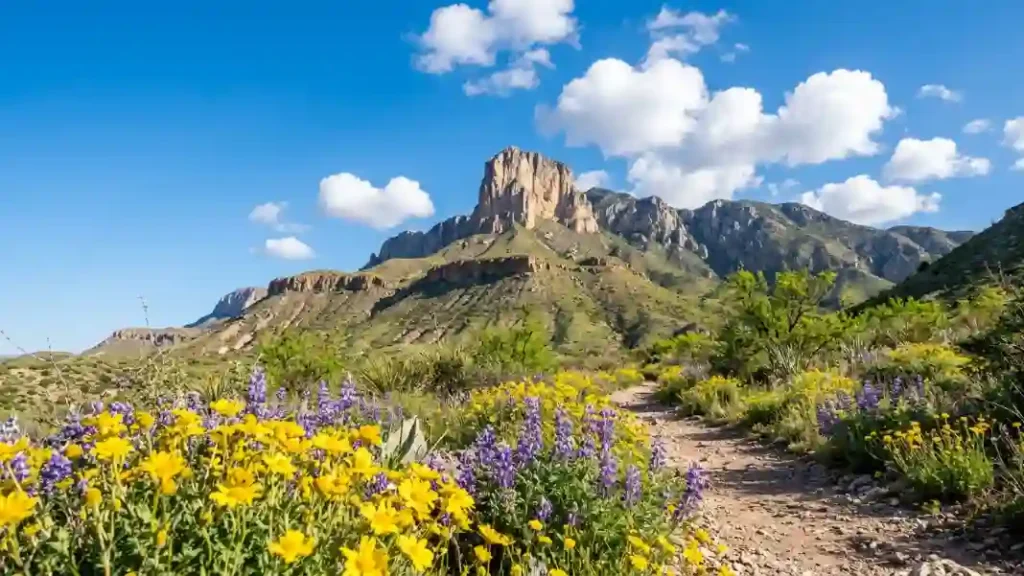
The best time to visit Guadalupe Mountains National Park depends on your interests and preferred activities. The park remains open year-round, but weather conditions vary significantly throughout the seasons. Spring and fall generally provide the most comfortable temperatures for hiking and outdoor recreation. Summer brings warmer conditions, while winter offers quieter trails and unique landscapes. Understanding seasonal differences can help visitors plan the perfect trip and make the most of their time in the park.
Visiting in Spring
Spring is one of the most popular times to visit the park. Mild temperatures create excellent conditions for hiking, camping, and sightseeing. Wildflowers often bloom across parts of the landscape, adding color to the desert scenery. Trails such as Guadalupe Peak Trail and McKittrick Canyon Trail become especially enjoyable during this season. Spring also attracts wildlife activity, making it a great time for photography and nature observation. Many travelers consider spring the ideal season for a Guadalupe Mountains National Park travel guide experience.
Visiting in Summer
Summer brings warmer temperatures, particularly in lower-elevation desert areas. Visitors who hike during summer should start early in the morning and carry plenty of water. Despite the heat, summer offers long daylight hours and excellent opportunities for exploring mountain trails. Higher elevations can provide cooler conditions than the surrounding desert. Campers and photographers often enjoy summer evenings when temperatures become more comfortable and skies remain clear.
Visiting in Fall
Fall is widely regarded as one of the best seasons to visit Guadalupe Mountains National Park. Comfortable temperatures and beautiful seasonal colors attract hikers from across the country. McKittrick Canyon becomes especially popular because of its colorful foliage. Fall weather creates ideal conditions for long hikes, camping trips, and scenic photography. Many visitors plan their trips specifically during this season to experience the canyon’s famous autumn scenery.
Visiting in Winter
Winter offers a quieter and more peaceful experience. Cooler temperatures make hiking more comfortable for many visitors, especially on challenging trails. Snow occasionally appears on higher elevations, creating striking contrasts with the desert landscape below. Crowds are generally smaller, allowing visitors to enjoy popular attractions with fewer people around. Winter also provides excellent opportunities for photography and wildlife observation. Proper clothing is important because mountain temperatures can become quite cold.
Seasonal Comparison Table
| Season | Weather | Crowds | Best Activities |
| Spring | Mild and pleasant | Moderate to High | Hiking, camping, wildlife watching |
| Summer | Hot in lower elevations | Moderate | Early morning hikes, stargazing |
| Fall | Comfortable and scenic | High | Hiking, photography, fall colors |
| Winter | Cool to cold | Low | Hiking, wildlife viewing, photography |
Wildlife in Guadalupe Mountains National Park
Guadalupe Mountains National Park supports a diverse range of wildlife thanks to its varied ecosystems and elevations. Visitors can encounter mammals, birds, reptiles, and many other species throughout the park. Wildlife viewing adds excitement to hiking adventures and provides opportunities to observe animals in their natural habitats. Early mornings and evenings often offer the best chances for sightings. Respecting wildlife and maintaining a safe distance helps protect both animals and visitors while enhancing the overall experience.
Mule Deer
Mule deer are among the most commonly seen animals in the park. Visitors frequently spot them near trails, campgrounds, and canyon areas, particularly during the early morning and late afternoon hours. Their large ears and graceful movements make them easy to recognize. Mule deer play an important role in the park’s ecosystem and often provide excellent opportunities for wildlife photography. Observing these animals in their natural environment is one of the many highlights of visiting the park.
Elk
The park is home to a small but impressive population of elk. These large mammals often inhabit higher elevations and forested areas where they find food and shelter. Spotting an elk can be a memorable experience because they are less commonly seen than mule deer. Visitors who explore remote trails or quieter sections of the park may have better opportunities to observe these magnificent animals. Elk contribute to the park’s rich biodiversity and natural appeal.
Coyotes
Coyotes are highly adaptable predators that live throughout the park. Visitors occasionally hear their calls during the evening or spot them moving through open desert landscapes. Coyotes play an important role in maintaining ecological balance by helping control smaller animal populations. Although they generally avoid people, visitors should never feed or approach them. Watching a coyote in its natural habitat can be a fascinating wildlife experience.
Birds
Birdwatchers will find plenty to enjoy in Guadalupe Mountains National Park. The park supports a wide variety of bird species thanks to its diverse habitats. Visitors may see hawks, eagles, woodpeckers, hummingbirds, and many migratory birds throughout the year. Areas such as McKittrick Canyon and Dog Canyon are particularly popular for birdwatching. Bringing binoculars can greatly improve the experience and help visitors identify different species.
Reptiles
Several reptile species inhabit the park’s desert and rocky environments. Visitors may encounter lizards, snakes, and other reptiles while exploring trails and scenic areas. Most reptiles prefer to avoid human contact and play important roles in the ecosystem. Observing these animals from a safe distance allows visitors to appreciate their unique adaptations and behaviors. Reptiles contribute to the rich wildlife diversity that makes Guadalupe Mountains National Park such an interesting destination for nature lovers.
Stargazing in Guadalupe Mountains National Park
Guadalupe Mountains National Park is one of the best places in Texas for stargazing. Its remote location, high elevations, and limited artificial light create ideal conditions for viewing the night sky. On clear evenings, visitors can see thousands of stars, bright planets, constellations, and even the Milky Way stretching across the horizon. Stargazing has become one of the most popular activities in the park, especially for campers, photographers, and nature lovers. Whether you are an experienced astronomer or simply enjoy looking at the stars, the park offers unforgettable nighttime views that few destinations can match.
Why It’s One of Texas’ Best Stargazing Destinations
The park’s location far from major cities helps create exceptionally dark skies. Unlike urban areas where artificial lights reduce visibility, Guadalupe Mountains National Park provides a natural environment where celestial objects appear brighter and more detailed. Higher elevations and dry desert air often improve viewing conditions throughout the year. Visitors frequently enjoy clear skies and excellent visibility, making the park one of the top destinations for astronomy enthusiasts. These favorable conditions allow travelers to experience the beauty of the night sky in a way that is becoming increasingly rare.
Best Stargazing Locations
Several areas within the park provide excellent stargazing opportunities. Open spaces near Pine Springs Campground offer easy access and wide views of the night sky. Higher-elevation viewpoints along hiking trails can provide even more dramatic perspectives. Remote backcountry campsites are also popular because they offer minimal light interference and a peaceful atmosphere. Visitors who choose open areas with unobstructed horizons often enjoy the best views. Arriving before sunset allows enough time to find a safe and comfortable observation spot.
What to Bring
Preparing properly can improve your stargazing experience. Bring warm clothing because temperatures can drop significantly after sunset, especially at higher elevations. A flashlight with a red-light setting helps preserve night vision while moving around safely. Binoculars or a telescope can reveal additional details in the night sky, although they are not necessary to enjoy the experience. A reclining chair or blanket can also make viewing more comfortable. Carrying water and snacks is useful for longer stargazing sessions in remote areas.
Photography Guide
Guadalupe Mountains National Park offers endless opportunities for photography. The park’s combination of rugged mountains, colorful canyons, dramatic desert landscapes, and dark night skies creates a wide variety of photographic subjects. Whether you are using a smartphone or professional camera equipment, you can capture memorable images throughout the year. Different seasons, weather conditions, and times of day provide unique lighting opportunities that help photographers create stunning compositions. With a little planning, visitors can return home with some of their best travel photographs.
Best Photography Locations
Several locations stand out as photography hotspots within the park. Guadalupe Peak offers panoramic mountain views that are especially impressive during sunrise and sunset. El Capitan provides a dramatic subject that photographs beautifully from multiple angles. Salt Basin Dunes create unique desert scenes with bright white sand and striking contrasts. McKittrick Canyon adds colorful vegetation and canyon scenery to the mix. These locations showcase the park’s diversity and provide excellent opportunities for both landscape and nature photography.
Fall Photography in McKittrick Canyon
Many photographers visit the park specifically to capture the famous fall colors of McKittrick Canyon. During autumn, the canyon transforms into one of the most colorful natural areas in Texas. Golden, orange, and red leaves create beautiful contrasts against the surrounding cliffs and desert environment. Soft lighting during the morning and late afternoon often produces the most impressive images. Fall remains one of the busiest photography seasons because the canyon offers scenery that is difficult to find elsewhere in the region.
Landscape Photography Tips
Successful landscape photography often depends on timing and preparation. Early morning and late afternoon provide the best natural lighting because shadows become softer and colors appear richer. Visitors should consider carrying a tripod for sharper images, especially during low-light conditions. Exploring different viewpoints and compositions can help create more unique photographs. Paying attention to weather conditions can also be beneficial because clouds and changing light often add drama to landscape scenes. Patience and careful observation usually lead to the most rewarding results.
Night Sky Photography
The park’s dark skies make it an excellent destination for night sky photography. Photographers can capture stars, constellations, and the Milky Way with impressive clarity. Using a tripod and long exposure settings allows cameras to collect more light and reveal details that may not be visible to the naked eye. Areas away from campgrounds and visitor facilities generally provide the darkest conditions. Clear weather and moonless nights often produce the best results. Night photography offers a unique way to showcase the beauty of Guadalupe Mountains National Park.
Guadalupe Mountains National Park for Families
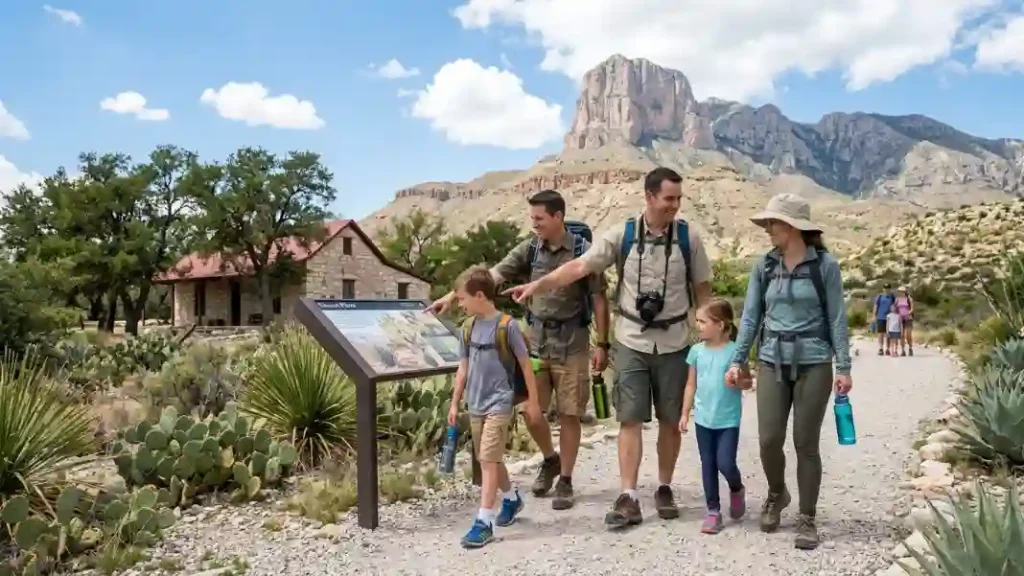
Many people associate Guadalupe Mountains National Park with challenging hikes, but families can also enjoy a rewarding visit. The park offers several activities suitable for children and visitors of different ages. Families can explore shorter trails, learn about nature and history, observe wildlife, and participate in educational programs. Spending time outdoors together creates lasting memories while introducing children to the beauty of national parks. With proper planning, families can enjoy a safe and enjoyable adventure in this remarkable Texas destination.
Family-Friendly Trails
Several trails within the park are suitable for families with children. The Smith Spring Trail is a popular option because it combines manageable distances with beautiful scenery. Shorter sections of McKittrick Canyon also provide enjoyable hiking opportunities for younger visitors. These trails allow families to experience mountain and desert environments without committing to strenuous hikes. Parents should choose routes based on their children’s abilities and bring plenty of water for everyone. Family-friendly trails offer a great introduction to the park’s natural beauty.
Kid-Friendly Activities
Children can enjoy a variety of activities beyond hiking. Wildlife watching often captures young visitors’ attention as they search for mule deer, birds, and other animals. Exploring the Frijole Ranch History Museum introduces kids to local history and ranching culture. Scenic viewpoints, photography opportunities, and nature observation also provide engaging experiences. Encouraging children to identify plants, animals, and geological features can make the visit both fun and educational. These activities help create a meaningful connection with the natural world.
Junior Ranger Program
The Junior Ranger Program is one of the best family activities available in the park. This educational program encourages children to learn about wildlife, geology, conservation, and park history through hands-on activities. Participants complete age-appropriate tasks and earn a Junior Ranger badge after finishing the program. The experience helps children engage with the park while developing a deeper appreciation for nature. Many families consider the Junior Ranger Program one of the highlights of their visit because it combines learning with adventure.
Common Mistakes First-Time Visitors Make
First-time visitors often underestimate certain aspects of Guadalupe Mountains National Park. Proper preparation can make the difference between an enjoyable adventure and a frustrating experience. The park’s remote location, challenging terrain, and changing weather conditions require thoughtful planning. Understanding common mistakes helps travelers avoid unnecessary problems and make the most of their visit. By preparing ahead of time, visitors can enjoy safer hikes, smoother travel experiences, and a more rewarding exploration of the park.
Underestimating Hiking Difficulty
Many visitors assume that all park trails are relatively easy, but some routes can be quite demanding. Trails such as the Guadalupe Peak Trail involve significant elevation gain and require physical endurance. Hikers who are not prepared may find the climb more challenging than expected. Researching trail distances, difficulty levels, and elevation changes before starting can help visitors choose appropriate routes. Selecting hikes that match your fitness level leads to a more enjoyable experience.
Bringing Too Little Water
One of the most common mistakes is not carrying enough water. The park’s desert environment can cause dehydration quickly, especially during warmer months. Visitors often underestimate how much water they will need while hiking. Carrying extra water is always a smart decision, even on shorter trails. Staying properly hydrated helps maintain energy levels and reduces the risk of heat-related illnesses. Water should be considered one of the most important items on any hiking checklist.
Ignoring Weather Conditions
Weather in Guadalupe Mountains National Park can change rapidly. Strong winds, temperature fluctuations, and seasonal storms can affect hiking conditions throughout the year. Visitors who fail to check forecasts may encounter unexpected challenges during their trip. Dressing in layers and preparing for different weather scenarios can improve comfort and safety. Reviewing current conditions before heading out allows hikers to make informed decisions and adjust plans if necessary.
Arriving Without Reservations
Many travelers arrive expecting campsites or nearby accommodations to be available without advance planning. During busy travel periods, campgrounds, hotels, and popular activities may fill quickly. Making reservations ahead of time helps reduce stress and ensures access to preferred accommodations. Visitors should also review campground policies and reservation requirements before traveling. Planning early often results in a smoother and more enjoyable Guadalupe Mountains National Park experience.
Essential Visitor Tips
A little preparation can greatly improve your experience in Guadalupe Mountains National Park. The park’s remote location, changing weather, and rugged terrain make planning especially important. Visitors who understand local conditions can enjoy safer hikes, more comfortable camping trips, and smoother travel experiences. Whether you are visiting for a day or following a longer Guadalupe Mountains National Park itinerary, these practical tips can help you make the most of your adventure while protecting both yourself and the park’s natural environment.
Weather Conditions
Weather can vary significantly throughout the park due to changes in elevation and seasonal patterns. Lower desert areas often experience warmer temperatures, while higher elevations can be much cooler and windier. Spring and fall generally provide the most comfortable hiking conditions, but strong winds can occur at any time of year. Summer heat requires extra precautions, and winter may bring cold temperatures to mountain areas. Always check current weather forecasts before your visit and dress in layers so you can adapt to changing conditions throughout the day.
Cell Service Availability
Visitors should not rely heavily on mobile phone coverage while exploring the park. Cell service is available in some locations, particularly near roads and developed areas, but coverage can become weak or unavailable in remote sections of the park. Hikers heading into backcountry areas should prepare for limited communication options. Downloading maps, trail information, and important travel details before arriving can be extremely helpful. Informing friends or family about your plans before beginning a hike is also a smart safety practice.
Water Sources
Water availability is limited throughout Guadalupe Mountains National Park, making hydration one of the most important aspects of trip planning. Visitors should carry enough water for all planned activities, especially during longer hikes. Many trails have no reliable natural water sources, and desert conditions can quickly increase the risk of dehydration. Even experienced hikers should bring extra water as a precaution. Planning hydration needs in advance helps ensure a safer and more enjoyable experience while exploring the park.
Safety Guidelines
Following basic safety practices can help prevent accidents and emergencies. Stay on marked trails, monitor weather conditions, and avoid hiking beyond your abilities. Carry essential supplies such as water, snacks, navigation tools, and appropriate clothing. Wildlife should always be observed from a safe distance without feeding or approaching animals. Visitors should also be aware of trail conditions and allow enough time to complete hikes before dark. These precautions help create a safer environment for everyone enjoying the park.
Leave No Trace Principles
Protecting the natural beauty of Guadalupe Mountains National Park requires responsible behavior from every visitor. Follow Leave No Trace principles by packing out all trash, staying on designated trails, and avoiding damage to plants or historical sites. Respect wildlife by observing animals from a distance and never leaving food behind. Campers should use designated areas and minimize their impact on the environment. By practicing responsible recreation, visitors help preserve the park’s landscapes and ecosystems for future generations.
Nearby Attractions Worth Visiting
Many travelers combine Guadalupe Mountains National Park with other nearby destinations to create a more complete Southwest adventure. Several outstanding attractions are located within driving distance and offer unique experiences that complement a visit to the park. From underground cave systems to white desert dunes and mountain forests, these destinations provide additional opportunities for hiking, sightseeing, photography, and outdoor recreation. Exploring nearby attractions can turn a simple park visit into an unforgettable regional road trip.
Carlsbad Caverns National Park
Carlsbad Caverns National Park is one of the most popular attractions near Guadalupe Mountains National Park. Located in nearby New Mexico, it features one of the world’s most impressive cave systems. Visitors can explore enormous underground chambers filled with dramatic rock formations and unique geological features. Many travelers visit both parks during the same trip because they are located close to each other. The combination of mountain landscapes above ground and spectacular caverns below ground creates a diverse and memorable travel experience.
White Sands National Park
White Sands National Park offers a completely different landscape from the rugged mountains of Guadalupe. The park features vast fields of brilliant white gypsum dunes that stretch across the desert. Visitors can walk among the dunes, enjoy photography, and experience one of the most unusual natural environments in the United States. The contrast between White Sands and Guadalupe Mountains National Park makes them excellent destinations to combine within a Southwest road trip itinerary.
Lincoln National Forest
Lincoln National Forest provides visitors with cooler mountain environments, forested landscapes, and additional outdoor recreation opportunities. Located in southern New Mexico, the forest features scenic drives, hiking trails, wildlife viewing, and camping areas. Travelers who enjoy mountain scenery will appreciate the contrast between the forest’s pine-covered slopes and the desert landscapes surrounding Guadalupe Mountains National Park. It is an excellent destination for visitors looking to extend their outdoor adventure.
El Paso
El Paso serves as the largest nearby city and offers a variety of cultural, historical, and dining experiences. Visitors can explore museums, parks, local restaurants, and shopping districts before or after visiting Guadalupe Mountains National Park. The city also provides convenient transportation options, accommodations, and travel services. Many travelers use El Paso as their gateway to West Texas and the surrounding national parks. Its combination of urban attractions and proximity to outdoor destinations makes it a valuable addition to any regional itinerary.
Guadalupe Mountains National Park vs Big Bend National Park
Many travelers planning a Texas national park adventure compare Guadalupe Mountains National Park with Big Bend National Park. Both parks offer outstanding scenery, excellent hiking, and unforgettable outdoor experiences, but each has its own strengths. Understanding the differences between the two destinations can help visitors choose the park that best matches their interests, available time, and travel goals. Some travelers even choose to visit both parks as part of an extended Texas road trip.
Hiking Comparison
When it comes to hiking, both parks offer excellent opportunities, but the experiences are quite different. Guadalupe Mountains National Park is known for mountain hiking, including the famous Guadalupe Peak Trail, which leads to the highest point in Texas. Big Bend National Park offers a wider variety of hiking environments, including desert trails, river canyons, and mountain routes. Visitors focused primarily on challenging mountain hikes may prefer Guadalupe Mountains, while those seeking greater trail diversity may enjoy Big Bend.
Scenic Views
Both parks provide incredible scenery, but their landscapes differ significantly. Guadalupe Mountains National Park features rugged peaks, dramatic canyons, and expansive desert views. Big Bend National Park combines mountains, desert landscapes, and the scenic Rio Grande River. Travelers looking for dramatic elevation changes and mountain panoramas often prefer Guadalupe Mountains, while visitors seeking greater landscape diversity may find Big Bend more appealing. Both parks offer excellent photography opportunities throughout the year.
Camping
Camping experiences vary between the two parks. Guadalupe Mountains National Park offers quieter campgrounds and a stronger focus on hiking-centered adventures. Big Bend National Park provides more camping options, including developed campgrounds and remote backcountry sites across a much larger area. Visitors seeking solitude may appreciate Guadalupe Mountains, while those wanting a wider selection of camping experiences may prefer Big Bend. Both parks provide excellent opportunities for stargazing and outdoor recreation.
Crowds
One advantage of Guadalupe Mountains National Park is its relatively low visitor numbers. Many travelers overlook the park in favor of more famous destinations, resulting in quieter trails and campgrounds. Big Bend National Park generally attracts larger crowds, especially during peak travel seasons. Visitors seeking a more peaceful and less crowded experience often prefer Guadalupe Mountains. Those who enjoy a broader range of facilities and attractions may find Big Bend worth the additional visitor traffic.
Which Park Should You Visit?
The best choice depends on your travel style and interests. Choose Guadalupe Mountains National Park if your priority is mountain hiking, reaching the highest point in Texas, enjoying quieter trails, and experiencing one of the most underrated national parks in the country. Choose Big Bend National Park if you want greater landscape diversity, river activities, and a larger range of outdoor experiences. If time allows, visiting both parks offers the most complete West Texas adventure and provides an incredible opportunity to explore two of the state’s most remarkable natural destinations.
Frequently Asked Questions
Is Guadalupe Mountains National Park Worth Visiting?
Yes, Guadalupe Mountains National Park is absolutely worth visiting, especially for travelers who enjoy hiking, nature, photography, and outdoor adventure. The park offers dramatic mountain scenery, peaceful trails, diverse wildlife, and the opportunity to climb Guadalupe Peak, the highest point in Texas. Unlike some of the country’s busier national parks, it provides a quieter and more relaxed experience. Visitors can explore beautiful destinations such as McKittrick Canyon, Devil’s Hall, and Salt Basin Dunes while enjoying fewer crowds. Its combination of natural beauty and outdoor recreation makes it one of the most underrated national parks in the United States.
How Many Days Do You Need?
Most visitors spend one to three days exploring Guadalupe Mountains National Park. A one-day trip allows enough time to see major highlights and complete a shorter hike. Two days provide a more balanced experience that includes hiking, sightseeing, and photography. Three days or more allow visitors to explore multiple trails, enjoy camping, discover hidden gems, and experience the park at a slower pace. The ideal length of stay depends on your interests and activity level, but two days is often considered the perfect amount of time for first-time visitors.
What Is the Best Hike?
The Guadalupe Peak Trail is widely considered the best hike in the park. This iconic route leads hikers to the summit of Guadalupe Peak, offering incredible panoramic views and the chance to stand on the highest point in Texas. However, other excellent trails include Devil’s Hall Trail, McKittrick Canyon Trail, and Smith Spring Trail. The best hike for you will depend on your fitness level, available time, and personal interests. Each trail offers unique scenery and memorable experiences.
Can Beginners Visit?
Yes, beginners can absolutely enjoy Guadalupe Mountains National Park. While some hikes are challenging, the park also offers easier trails and scenic areas suitable for less experienced visitors. Trails such as Smith Spring Trail and shorter sections of McKittrick Canyon provide excellent opportunities to experience the park without attempting strenuous climbs. Visitors can also enjoy wildlife watching, photography, stargazing, and historical attractions. Proper planning and choosing appropriate activities help ensure an enjoyable experience for all skill levels.
Are Dogs Allowed?
Dogs are allowed in certain developed areas of the park, including campgrounds and paved areas, but they are generally not permitted on most hiking trails or in wilderness areas. These restrictions help protect wildlife, preserve natural resources, and ensure visitor safety. Travelers visiting with pets should review current park regulations before arrival and plan accordingly. Nearby areas outside the park may offer additional opportunities for pet-friendly recreation.
Is There an Entrance Fee?
Yes, visitors must pay an entrance fee to access Guadalupe Mountains National Park. Fees vary depending on the type of pass purchased and may change over time. Travelers who frequently visit national parks may benefit from purchasing an annual national parks pass, which provides access to many federally managed recreation areas throughout the United States. Checking current fee information before your visit can help with trip planning and budgeting.
What Is the Highest Point in Texas?
The highest point in Texas is Guadalupe Peak, which rises to an elevation of 8,751 feet above sea level. Located within Guadalupe Mountains National Park, the peak attracts thousands of hikers each year. Reaching the summit is considered one of the top outdoor achievements in Texas and provides spectacular views of the surrounding mountains and desert landscapes. For many visitors, hiking Guadalupe Peak becomes the highlight of their trip.
Can You Drive Through the Park?
Unlike some national parks that feature long scenic drives, Guadalupe Mountains National Park is primarily a hiking-focused destination. Visitors can access key areas by road, including the Pine Springs Visitor Center, trailheads, campgrounds, and viewpoints. However, most of the park’s attractions require some walking or hiking to fully experience. Travelers looking for scenic drives can still enjoy beautiful views from nearby highways and surrounding areas.
What Should I Pack?
Packing the right gear can significantly improve your visit. Essential items include plenty of water, sturdy hiking shoes, sun protection, snacks, weather-appropriate clothing, and a daypack. Visitors planning longer hikes should also bring navigation tools, a first-aid kit, and extra layers for changing conditions. Photographers may want to carry camera equipment, while campers should bring appropriate camping gear. Proper preparation helps ensure a safer and more comfortable experience.
Is Camping Allowed?
Yes, camping is allowed in Guadalupe Mountains National Park. Visitors can choose between developed campgrounds such as Pine Springs Campground and Dog Canyon Campground, or explore designated backcountry camping options. Camping allows travelers to enjoy the park’s peaceful atmosphere, dark skies, and easy access to hiking trails. Reservations may be required during busy travel periods, so planning ahead is recommended.
When Is the Best Time to Visit?
Most travelers consider spring and fall the best times to visit Guadalupe Mountains National Park. These seasons offer comfortable temperatures, excellent hiking conditions, and beautiful scenery. Fall is particularly popular because of the colorful foliage in McKittrick Canyon. Spring provides pleasant weather and active wildlife viewing opportunities. Summer can be hot in lower elevations, while winter offers fewer crowds and unique photographic opportunities. The best season depends on your preferred activities and travel style.
Final Thoughts
Guadalupe Mountains National Park offers an unforgettable combination of rugged mountain landscapes, scenic hiking trails, fascinating history, and peaceful wilderness experiences. Whether you want to conquer Guadalupe Peak, explore colorful canyons, camp beneath star-filled skies, or simply enjoy some of the most beautiful scenery in Texas, this park delivers an experience that few destinations can match. Its remote location and smaller crowds allow visitors to connect with nature in a meaningful way while discovering one of the country’s most underrated national parks.
Who Should Visit Guadalupe Mountains National Park?
This park is an excellent destination for hikers, outdoor enthusiasts, photographers, campers, wildlife lovers, and road-trippers exploring the American Southwest. Families, solo travelers, couples, and adventure seekers can all find activities that match their interests. Visitors looking for a quieter alternative to more crowded national parks will especially appreciate the peaceful atmosphere and natural beauty found throughout the park.
Highlights to Prioritize
First-time visitors should prioritize hiking Guadalupe Peak, exploring McKittrick Canyon, walking the Devil’s Hall Trail, visiting Salt Basin Dunes, and enjoying a night of stargazing. These experiences showcase the park’s most impressive landscapes and provide a well-rounded introduction to its natural wonders. Travelers with additional time can explore hidden gems, scenic viewpoints, and less-traveled trails to gain a deeper appreciation for the park.
Planning Your Perfect Trip
The key to a successful visit is preparation. Research hiking trails, check weather forecasts, reserve accommodations early, and carry plenty of water during outdoor activities. Consider spending at least two days in the park to experience both its famous attractions and quieter areas. Combining Guadalupe Mountains National Park with nearby destinations such as Carlsbad Caverns National Park or White Sands National Park can create an even more memorable Southwest adventure. With thoughtful planning, your trip can become an unforgettable journey through one of Texas’ most remarkable natural landscapes.
