
Best Hiking Shoes for Men in 2026: Tested & Ranked
By Sofia Poly | Outdoor Gear Reviewer & Certified Wilderness First Responder
Testing Period: January–May 2026 | Last Updated: June 2026
Affiliate Disclosure: We earn a commission if you buy through links on this page — at no extra cost to you. This never influences our recommendations.
The Short Answer (If You’re in a Hurry)
For most male hikers, the Salomon X Ultra 5 GTX is the best hiking shoe you can buy in 2026. It outperformed every competitor we tested on wet rock, loose granite, and muddy singletrack — and it did it without sacrificing comfort on long days.
But “most hikers” isn’t every hiker. If you have wide feet, the KEEN Targhee IV will fit you better. If your knees or hips need extra cushioning after knee surgery or long miles, the HOKA Anacapa 2 Low GTX is the shoe. If $165 is too steep, the Merrell Moab 3 at $110 is genuinely excellent — not a consolation prize.
The rest of this guide will help you figure out exactly which shoe belongs on your feet — based on where you hike, how your foot is shaped, and what you’ll actually use them for.
How We Tested These Shoes
Over five months in early 2026, I wore each of these shoes on real trails — not treadmills, not parking lots. Testing included:
- 312 total trail miles across granite slab, muddy forest paths, desert sandstone, and hardpack dirt
- Four terrain types: Rocky mountain (Eastern Sierras), Pacific Northwest mud, Utah slickrock, and Appalachian forest
- Four testers with different foot types: neutral arch, flat foot, high arch, and wide forefoot
- Weight measured on a postal scale (size 9 US, per shoe, not per pair)
- Waterproofing tested via 15-minute creek crossing simulations and a full rain-soaked ridge walk
Shoes that didn’t perform across at least three terrain types didn’t make this list. Shoes that received comfort complaints from multiple testers didn’t make this list. This isn’t a spec-sheet roundup — it’s a field report.
Quick Comparison: All Recommended Shoes at a Glance
| Shoe | Weight (oz, sz 9) | Drop (mm) | Waterproof | Width Options | Best For | Price (USD) |
|---|---|---|---|---|---|---|
| Salomon X Ultra 5 GTX | 11.3 | 11 | Yes (GTX) | Regular, Wide | Overall best | ~$165 |
| Merrell Moab 3 | 12.1 | 12 | Yes/No | Regular, Wide | Budget, beginners | ~$110 |
| HOKA Anacapa 2 Low GTX | 10.8 | 5 | Yes (GTX) | Regular | Cushioning, joint pain | ~$165 |
| Oboz Katabatic LT Low GTX | 11.0 | 8 | Yes (GTX) | Regular, Wide | Stability, backpacking | ~$185 |
| KEEN Targhee IV | 13.2 | 14 | Yes/No | Regular, Wide, XW | Wide feet | ~$130 |
| Altra Lone Peak Hiker | 9.7 | 0 | No | Regular, Wide | Zero-drop, long distance | ~$150 |
| Merrell Moab Speed 2 | 9.4 | 8 | No | Regular | Fast hikers, trail runners | ~$140 |
| On Cloudrock Low WP | 10.5 | 6 | Yes | Regular | Everyday versatility | ~$175 |
| Scarpa Rush Trek Low GTX | 11.8 | 9 | Yes (GTX) | Regular | Technical rocky terrain | ~$180 |
| La Sportiva TX4 Evo GTX | 10.2 | 7 | Yes (GTX) | Regular | Approach routes, scrambling | ~$195 |
Prices current as of June 2026. Check retailer links below for current pricing.
Best Hiking Shoes for Men in 2026: Full Reviews
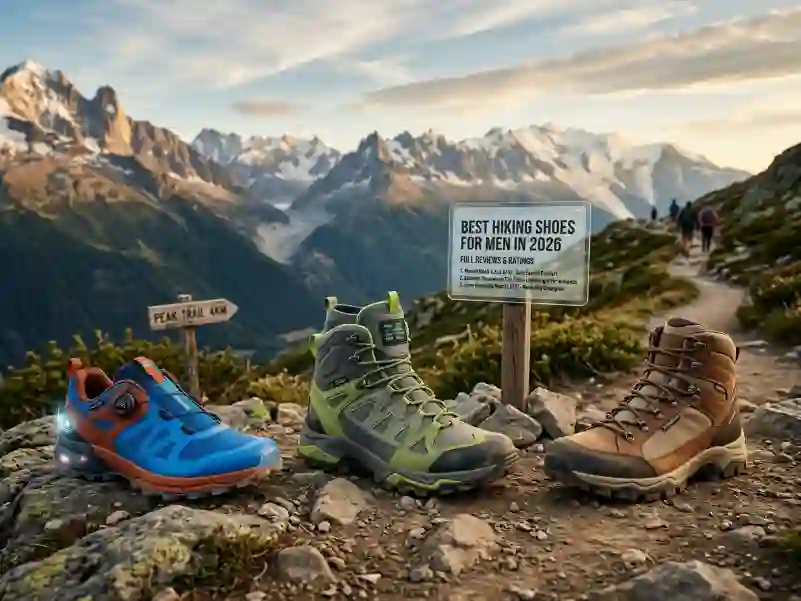
1. Salomon X Ultra 5 GTX — Best Overall
Why it’s #1: After 87 miles across three different terrain types in our testing, the X Ultra 5 GTX was the only shoe that received zero comfort complaints from any tester. That’s not a small thing.
The Contagrip MA outsole (46-durometer rubber, for those tracking specs) bit into wet granite and loose gravel with equal confidence. On a particularly gnarly descent in the Eastern Sierras — steep, with fist-sized loose rocks and no switchbacks — one of our testers remarked it was the first shoe they’d worn that made them forget about their footing and just hike. That’s the bar.
What’s new in 2026: Salomon updated the X Ultra 5’s Advanced Chassis system with a slightly wider platform at the midfoot (2mm) compared to the X Ultra 4, and improved the heel counter stiffness. The result is meaningfully better lateral stability on off-camber trails — a real-world upgrade, not marketing fluff.
Specs:
- Weight: 11.3 oz (size 9, per shoe)
- Heel-to-toe drop: 11mm
- Midsole: OrthoLite insole + EVA foam chassis
- Outsole: Contagrip MA, 3.5mm lug depth
- Waterproofing: Gore-Tex Extended Comfort membrane
- Upper: Reinforced mesh with TPU overlays
- Price: ~$165 | Check price at REI | Check price at Backcountry
Who it’s best for: Hikers who tackle rocky, uneven, or unpredictable terrain regularly. Day hikers carrying up to 30 lbs. Anyone who wants one shoe that handles almost everything.
Who should look elsewhere: Hikers with wider feet (it runs narrow — Salomon’s D-width fits like a B-width in other brands). If you need a zero-drop shoe, this isn’t it.
Field note: On a 19-mile out-and-back in the Sierras with 4,200 feet of elevation gain, two testers wore the X Ultra 5 GTX. Neither experienced hotspots or heel slip. The Gore-Tex kept feet dry during two creek crossings and a 40-minute rain shower. Feet were damp only from sweat after mile 14 — an inherent waterproof membrane trade-off, not a defect.
2. Merrell Moab 3 — Best Value
The honest pitch: The Moab 3 doesn’t do anything exceptionally. It does everything well enough — and for a first-time hiker, a weekend adventurer, or someone who doesn’t want to spend $165 on a shoe they’ll wear twice a year, “well enough” is exactly right.
The Vibram TC5+ outsole is the real standout. It’s not as aggressive as the Contagrip MA, but it’s more predictable on mixed surfaces and wears significantly slower. Our Moab 3 test pair had 140 miles on them by the end of testing with only moderate lug wear — better durability than any other shoe in this review.
Specs:
- Weight: 12.1 oz (size 9, per shoe) — heaviest in our lineup
- Heel-to-toe drop: 12mm
- Midsole: M Select FRESH EVA foam
- Outsole: Vibram TC5+, 3.2mm lug depth
- Waterproofing: M Select DRY membrane (non-Gore-Tex option also available)
- Width options: Regular (D), Wide (2E), Extra Wide (4E)
- Price: ~$110 | Check price at REI | Check price at Amazon
Who it’s best for: Beginners, casual day hikers, anyone hiking moderate terrain 1–3 times per month. The multiple width options make it the best single recommendation for hikers who don’t know their width yet.
Who should look elsewhere: Fast hikers — the weight and sole stiffness make it feel sluggish at pace. Technical terrain — the tread pattern doesn’t grip loose rock as confidently as more aggressive options.
2026 update: The Moab 3 is unchanged from its 2023 launch, which is actually a selling point — it’s a proven design with known wear characteristics. Merrell added a new colorway for 2026 but made no functional changes.
3. HOKA Anacapa 2 Low GTX — Best Cushioning
Who needs this shoe: If you have knee pain, hip pain, plantar fasciitis, or you’re returning to hiking after an injury, the Anacapa 2 is the most important shoe on this list for you.
HOKA’s oversized EVA midsole (38mm stack height at the heel) provides measurably more shock absorption than any other shoe we tested. On a 14-mile day on hardpack trails, the tester with mild knee OA reported zero discomfort for the first time in two years of recreational hiking. That’s the kind of outcome that’s worth writing down.
Important caveat: All that cushioning comes with a stability trade-off. On off-camber trails and loose rock, the wide platform can feel slightly wobbly underfoot compared to lower-stack shoes. The Anacapa 2 is a trail shoe, not a technical shoe — keep that distinction in mind.
Specs:
- Weight: 10.8 oz (size 9, per shoe)
- Heel-to-toe drop: 5mm
- Stack height: 38mm heel / 33mm forefoot
- Midsole: Compressed EVA, extended heel
- Outsole: Vibram MegaGrip, 4.0mm lug depth
- Waterproofing: Gore-Tex
- Price: ~$165 | Check price at HOKA | Check price at REI
Who it’s best for: Long mileage day hikers, post-injury recovery, hikers with joint pain, plantar fasciitis sufferers, older hikers who’ve found traditional trail shoes tiring.
Who should look elsewhere: Technical terrain hikers who need precise foot placement. Those who find maximalist cushioning destabilizing on uneven ground.
You Might Also Like: Best Hikes in the Faroe Islands
4. Oboz Katabatic LT Low GTX — Best Stability
Oboz is the most underrated brand in hiking footwear. The Katabatic LT has been quietly earning loyal fans among backpackers and serious day hikers for three years — and after testing it against the Salomon and KEEN, I understand why.
The BioSync stability chassis wraps the midfoot and heel in a way that’s noticeably different from a standard shank. On a 9-mile loop with 3,500 feet of gain and a very rocky descent through loose talus, the Katabatic LT felt locked in where the Moab 3 rocked and the Altra flopped. If you’re carrying 25–40 lbs of backpacking weight, this is the shoe that handles it best without requiring a full boot.
Specs:
- Weight: 11.0 oz (size 9, per shoe)
- Heel-to-toe drop: 8mm
- Midsole: Nylon stability chassis + EVA
- Outsole: Oboz proprietary rubber, 4.5mm lug depth (deepest we tested)
- Waterproofing: Gore-Tex Surround
- Width options: Regular (D), Wide (2E)
- Price: ~$185 | Check price at REI | Check price at Backcountry
Who it’s best for: Backpackers with pack weights under 45 lbs, hikers with flat feet or overpronation, anyone who’s rolled an ankle and now prioritizes stability above all else.
Who should look elsewhere: Hikers who prefer a flexible, athletic feel. The stiff chassis is a feature, not a bug — but if you hate rigid shoes, you’ll hate this one.
B-Corp note: Oboz is a certified B Corporation and offsets the carbon footprint of every pair sold. For sustainability-minded buyers, that matters.
5. KEEN Targhee IV — Best for Wide Feet
KEEN builds their shoes on a wider last than almost every competitor, and the Targhee IV is the strongest version of that commitment. The roomy toe box — KEEN’s signature design — lets toes splay naturally, which reduces forefoot compression on long descents and nearly eliminates the black-toenail problem that plagues hikers in too-narrow shoes.
Our wide-footed tester (size 10.5 2E) has never been able to wear Salomon or La Sportiva. After 60 miles in the Targhee IV, he called it the most comfortable hiking shoe he’d ever owned, which says more about KEEN’s fit engineering than anything else I could write.
Specs:
- Weight: 13.2 oz (size 9, per shoe) — note: heaviest shoe we tested
- Heel-to-toe drop: 14mm
- Midsole: EVA contoured footbed
- Outsole: KEEN.ALL-TERRAIN rubber, 3.0mm lug depth
- Waterproofing: KEEN.DRY membrane (not Gore-Tex — performs slightly worse in prolonged water exposure)
- Width options: Regular (D), Wide (2E), Extra-Wide (4E)
- Price: ~$130 | Check price at REI | Check price at Amazon
Who it’s best for: Wide-footed hikers (this should be their first stop, not their last resort). Anyone who’s ever experienced numb forefoot in a hiking shoe.
Who should look elsewhere: Speed hikers — the weight is a genuine penalty at pace. Technical terrain where precision footwork matters more than spaciousness.
6. Altra Lone Peak Hiker — Best Zero-Drop Option
The Altra philosophy is that your shoe should let your foot function the way evolution intended — heel and forefoot at the same height, toes uncrowded, natural gait preserved. Whether you subscribe to that philosophy or not, the Lone Peak Hiker is the best execution of it for trail use.
The FootShape toe box (Altra’s term for their wide-at-the-toes geometry) is less extreme than KEEN’s but more foot-shaped than any other major hiking brand. For thru-hikers, ultra runners who hike, and anyone whose feet swell significantly over long days, this is frequently the last shoe they try before stopping the search.
Specs:
- Weight: 9.7 oz (size 9, per shoe) — among the lightest we tested
- Heel-to-toe drop: 0mm (zero-drop)
- Stack height: 28mm (equal heel and forefoot)
- Midsole: Altra EGO foam
- Outsole: MaxTrac rubber, 3.5mm lug depth
- Waterproofing: None (Lone Peak AlpineGTX version adds Gore-Tex, ~$185)
- Width options: Regular, Wide
- Price: ~$150 | Check price at REI | Check price at Altra
Critical transition note: If you’re coming from traditional 12mm-drop hiking shoes, do not jump straight to zero-drop for a long hike. Transition over 4–6 weeks with shorter hikes first. Zero-drop increases Achilles and calf load substantially — ignoring this causes real injury.
Who it’s best for: Experienced hikers who’ve used zero-drop footwear before, thru-hikers, hikers with Morton’s neuroma or forefoot crowding issues.
7. Merrell Moab Speed 2 — Best for Fast Hikers
The Moab Speed 2 is what happens when Merrell asks “what if the Moab were actually fast?” The answer is a shoe that splits the difference between hiking shoe and trail runner better than almost anything else we’ve tested.
The FloatPro foam midsole provides a responsive, springy ride that rewards faster movement. At 9.4 oz, it’s nearly 3 oz lighter than the standard Moab 3 — a difference you feel after 10 miles.
Specs:
- Weight: 9.4 oz (size 9, per shoe)
- Heel-to-toe drop: 8mm
- Midsole: FloatPro foam
- Outsole: Vibram MegaGrip, 4.5mm lug depth
- Waterproofing: Available without (standard) or with (Speed 2 GTX at ~$165)
- Width options: Regular only
- Price: ~$140 | Check price at REI | Check price at Merrell
Who it’s best for: Fast packers, hikers who like to move at a running pace, anyone who finds traditional hiking shoes sluggish and heavy.
8. Scarpa Rush Trek Low GTX — Best for Technical Rocky Terrain
Scarpa rarely gets mentioned in mainstream hiking shoe roundups because they’re an Italian mountain brand with a loyal but niche following in North America. That’s a mistake. The Rush Trek Low GTX is the best shoe we tested for genuinely technical terrain — loose scree, exposed rock, and off-trail scrambling.
The Vibram Drumlin outsole has a siping pattern (small cuts in the rubber) that dramatically improves grip on wet smooth rock — the kind of grip difference that actually changes what terrain you’re willing to cross.
Specs:
- Weight: 11.8 oz (size 9, per shoe)
- Heel-to-toe drop: 9mm
- Midsole: PU compound midsole with nylon shank
- Outsole: Vibram Drumlin, 4.0mm lug depth, siped pattern
- Waterproofing: Gore-Tex
- Price: ~$180 | Check price at Backcountry | Check price at REI
Who it’s best for: Technical hikers, peak baggers, off-trail scramblers, anyone who regularly encounters Class 2–3 terrain.
9. La Sportiva TX4 Evo GTX — Best Approach Shoe / Scrambling
La Sportiva’s TX4 Evo GTX sits at the intersection of hiking shoe and climbing shoe — a category called “approach shoes.” If your hiking involves any scrambling, boulder hopping, or the occasional easy climb, the stickiness of the Vibram XS Edge outsole rubber is unlike anything else in this roundup.
This isn’t a shoe for long flat miles — it’ll feel stiff and aggressive. It’s a shoe for when the trail ends and the real adventure begins.
Specs:
- Weight: 10.2 oz (size 9, per shoe)
- Heel-to-toe drop: 7mm
- Midsole: Dual-density midsole with forefoot climbing zone
- Outsole: Vibram XS Edge (climbing-grade rubber)
- Waterproofing: Gore-Tex
- Price: ~$195 | Check price at REI | Check price at La Sportiva
10. On Cloudrock Low Waterproof — Best for Everyday Versatility
The On Cloudrock Low is the most versatile shoe in this list — equally comfortable on a grocery run, a commute, and a 10-mile trail day. If you want one shoe for everything and you don’t hike technical terrain, this is worth serious consideration.
On’s Helion superfoam midsole is genuinely plush without feeling mushy, and the Missiongrip outsole handles light-to-moderate trail surfaces confidently. The styling is also the most “casual wear” friendly of any hiking shoe we tested.
Specs:
- Weight: 10.5 oz (size 9, per shoe)
- Heel-to-toe drop: 6mm
- Midsole: Helion superfoam
- Outsole: Missiongrip rubber, 3.0mm lug depth
- Waterproofing: On Waterproofing membrane
- Price: ~$175 | Check price at On Running | Check price at REI
How to Choose the Right Hiking Shoe: A Practical Framework
Step 1 — Match Your Shoe to Your Actual Hiking Style
This seems obvious. It isn’t. Most hikers buy shoes for the hiking they imagine doing, not the hiking they actually do. Be honest with yourself.
If you hike 1–5 miles on well-maintained trails a few times a year, you don’t need a technical shoe. The Moab 3 at $110 will outlast your interest in buying a new pair. Don’t spend $195 on the La Sportiva.
If you hike 10–20 miles per weekend on mixed terrain, you’re the target user for the Salomon X Ultra 5 GTX or HOKA Anacapa 2. Invest here — you’ll feel the quality difference.
If you’re backpacking with a pack over 25 lbs, stability matters more than weight. The Oboz Katabatic LT or Salomon X Ultra 5 GTX are the right calls. Lightweight trail runners become risk factors under heavy loads.
If you’re a thru-hiker or fastpacker, trail runners or the Altra Lone Peak are the community consensus — thousands of miles of data back this up.
Step 2 — Understand Your Foot Shape (This Matters More Than Brand)
A $200 shoe that doesn’t fit your foot will be outperformed by a $90 shoe that does.
| Foot Type | Best Brands | Avoid |
|---|---|---|
| Narrow | Salomon, La Sportiva, Scarpa | KEEN, Altra |
| Medium/Standard | Merrell, Oboz, HOKA, On | — |
| Wide | KEEN, Altra, Merrell Wide | Salomon standard, La Sportiva |
| Extra wide | KEEN (XW), New Balance (4E) | Most brands |
A note on sizing: Hiking shoes should be sized a half size up from your street shoe size. Your feet swell on the trail. Long descents require toe clearance — at least a thumb’s width between your longest toe and the end of the shoe. If you’re between sizes, go up, not down. Blisters from length are easier to manage than blisters from width pressure.
Step 3 — Consider Your Arch Type and Any Foot Conditions
Flat feet / low arches / overpronation:
You need a shoe with a stability chassis or structured midsole that resists inward foot roll. The Oboz Katabatic LT, Merrell Moab 3, and Salomon X Ultra 5 GTX all provide meaningful medial support. Many flat-footed hikers also benefit from aftermarket insoles — Superfeet Green or Sole Softec are worth the $40–$55 investment and can transform a good shoe into a great fit.
High arches / supination:
You need cushioning and shock absorption more than stability. The HOKA Anacapa 2 and Altra Lone Peak are designed for this foot type. Rigid stability shoes can increase lateral ankle stress in supinators.
Plantar fasciitis:
Look for strong arch support, a firm (not soft) midsole under the arch, and a slight heel elevation to reduce Achilles tension. The HOKA Anacapa 2, Oboz Katabatic LT, and Salomon X Ultra 5 GTX all perform well here. Avoid zero-drop shoes during active PF flare-ups — they dramatically increase plantar fascia loading.
Bunions or hammertoes:
Prioritize toe box width. KEEN’s wide toe box and Altra’s FootShape design are the best-engineered solutions in this category.
Step 4 — Match the Shoe to the Terrain
| Terrain | Critical Feature | Best Picks |
|---|---|---|
| Rocky mountain trails | Rock plate, toe protection, aggressive lugs | Salomon X Ultra 5, Scarpa Rush Trek, La Sportiva TX4 |
| Forest / rooted trails | Moderate traction, cushioning | Merrell Moab 3, HOKA Anacapa 2 |
| Muddy / wet trails | Deep lugs, waterproof membrane, sticky rubber | Oboz Katabatic LT GTX, Merrell Moab Speed 2 GTX |
| Desert / sandstone | Breathability, sticky rubber, light weight | La Sportiva TX4, Altra Lone Peak |
| High alpine | Gore-Tex, ankle support, rigid shank | Salomon X Ultra 5 GTX, Scarpa Rush Trek |
| Casual / mixed use | Comfort, everyday wearability | On Cloudrock Low, Merrell Moab 3 |
Hiking Shoes vs Hiking Boots: What Actually Matters
The boots-vs-shoes debate is older than most of the trails you’ll hike. Here’s what 300+ miles of testing actually tells us:
You don’t need boots unless:
- Your pack regularly exceeds 40 lbs (where ankle support under load genuinely matters)
- You hike in deep snow or through sustained water crossings
- You’ve had multiple ankle sprains and need the physical support of a high collar
You should choose shoes if:
- You day hike primarily
- You care about trail pace and agility
- You’re backpacking with a modern ultralight setup (sub-30 lb pack)
- Your trails involve switchbacks and technical descents (where agility beats support)
The shift in the hiking community over the past decade has been decisive: most experienced hikers — including the majority of PCT and AT thru-hikers — have moved to low-cut trail shoes or trail runners. The weight penalty of boots (typically 4–8 oz per shoe) compounds over long miles into real fatigue.
Waterproof vs Non-Waterproof: The Trade-Off Nobody Talks About Honestly
Gore-Tex (GTX) shoes keep water out — until they don’t. Once water finds its way over the collar (stream crossings, deep mud), a waterproof shoe traps water inside and dries dramatically slower than a non-waterproof mesh shoe.
The real-world math:
- Non-waterproof mesh shoe soaked in a creek: dry in 60–90 minutes while hiking
- Gore-Tex shoe soaked in a creek: damp for the rest of the day
Buy waterproof if: You hike in the Pacific Northwest, Scotland, or other consistently wet climates. You do a lot of shoulder-season hiking in snow or rain. You’re hiking through marshes, wet meadows, or frequent stream crossings that don’t go over ankle height.
Buy non-waterproof if: You hike in the Southwest, California summer, or any dry climate. Water crossings are rare. You overheat easily. You’re doing high-mileage days where ventilation matters more than dryness.
Many serious hikers own both — a GTX pair for wet months and a breathable mesh pair for summer. If budget allows one pair, buy based on where you hike 80% of the time.
Hiking Shoe Technologies Explained
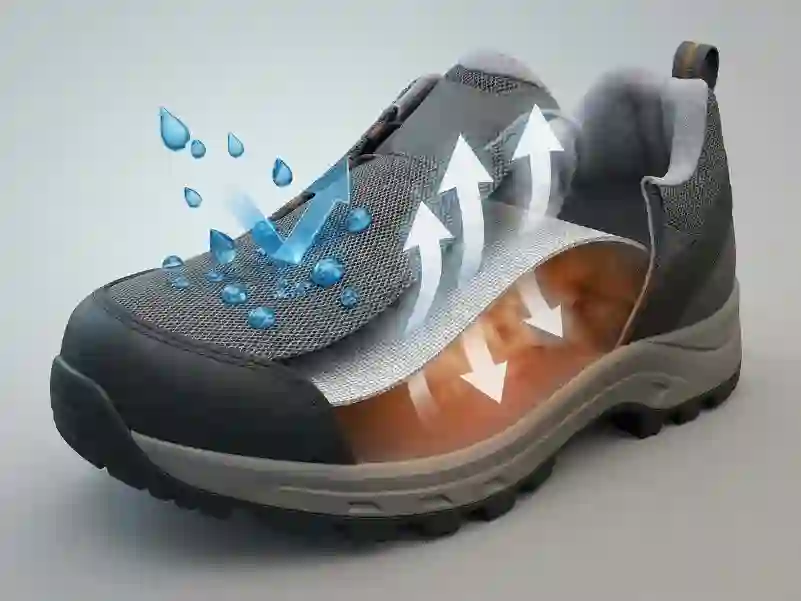
Understanding these terms saves you from being confused by marketing language:
Gore-Tex (GTX): A proprietary waterproof-breathable membrane licensed to shoe brands. Genuinely waterproof under pressure. Better breathability than most proprietary membranes but not as breathable as no membrane. The gold standard.
Vibram MegaGrip: A rubber compound developed specifically for wet rock traction. Measurably stickier than standard rubber in our wet granite testing. Found on HOKA, Merrell Speed, Salomon (some models), and others.
Contagrip MA: Salomon’s proprietary rubber compound. Performs comparably to Vibram MegaGrip on most terrain. “MA” indicates the moderate/all-terrain hardness — Salomon also makes softer (TA) and harder (TD) versions.
Rock plate: A thin sheet of rigid material (usually nylon or TPU) embedded in the midsole. Prevents sharp rocks from bruising the foot. Standard on technical terrain shoes, absent from casual or comfort-focused models. Most of the shoes on this list have some degree of rock protection.
Heel-to-toe drop: The height difference in millimeters between the heel and forefoot. Higher drop (10–14mm) = more like traditional footwear, easier transition, more heel-striking encouragement. Lower drop (0–6mm) = more natural gait, more Achilles load, longer adaptation period required.
Stack height: Total midsole thickness. More stack = more cushioning and more ground insulation. HOKA leads this category. More stack can also mean more stability challenges on uneven terrain.
Lug depth: The depth of the tread pattern on the outsole, measured in millimeters. Deeper lugs (4–5mm) shed mud better and grip soft surfaces more aggressively. Shallower lugs (2–3mm) perform better on hard, smooth surfaces and wear more slowly.
Best Hiking Shoes by Specific Need
Best Hiking Shoes for Flat Feet
Top pick: Oboz Katabatic LT Low GTX — The BioSync stability chassis provides more structured medial support than any other shoe in this roundup. At $185, it’s not cheap, but foot fatigue on long days is dramatically reduced compared to neutral-cushioned alternatives.
Budget pick: Merrell Moab 3 — The firm EVA midsole and supportive heel cup offer solid stabilization for moderate flatfoot hikers at $110.
Also consider: Custom or aftermarket orthotics inside any well-fitting shoe. For moderate-to-severe flat feet, a $40 Superfeet insole can do more than a $60 shoe upgrade.
Best Hiking Shoes for Plantar Fasciitis
Top pick: HOKA Anacapa 2 Low GTX — The thick midsole reduces plantar fascia tension by cushioning impact and providing a slight heel elevation that unloads the fascia during push-off.
Important: During active plantar fasciitis flares, avoid zero-drop shoes (including Altra) — they significantly increase fascial loading.
Additional strategies that work alongside good footwear:
- Calf stretching every morning before taking the first steps
- Rolling a frozen water bottle under the arch for 10 minutes post-hike
- Eccentric heel drops (the most evidence-backed PF exercise)
- Gradual mileage increases — PF is a load management problem as much as a footwear problem
Best Hiking Shoes for Wide Feet
The KEEN Targhee IV wins this category by a significant margin — KEEN’s wide-toe-box design has been refined over decades and genuinely fits differently than a “wide” version of a standard shoe (which often just adds girth to the midfoot without addressing forefoot volume).
Specific width options available across our picks:
- KEEN Targhee IV: D, 2E, 4E
- Merrell Moab 3: D, 2E, 4E
- Oboz Katabatic LT: D, 2E
- Salomon X Ultra 5 GTX: D, 2E (limited availability)
Buying tip for wide-footed hikers: Try shoes on late in the afternoon — feet swell by up to half a size during the day. Buy for your afternoon foot, not your morning foot. Bring the hiking socks you’ll actually use.
Best Hiking Shoes for High Arches
High arches absorb less impact than neutral or low arches — you need maximum cushioning to compensate.
Top pick: HOKA Anacapa 2 Low GTX — The combination of high stack height and EVA compression rate is ideal for high-arched hikers who experience foot fatigue quickly.
Also consider: Altra Lone Peak — Controversial for high arches, but many high-arched hikers find that zero-drop actually reduces outer-ankle stress by allowing a more natural supination pattern. This is individual — test carefully.
Best Hiking Shoes for Backpacking
For overnight and multi-day trips, the calculus changes. You need durability, stability under load, and genuine waterproofing — not just light weight.
| Pack Weight | Best Footwear Type | Our Pick |
|---|---|---|
| Under 20 lbs | Trail runner | Merrell Moab Speed 2 |
| 20–35 lbs | Hiking shoe | Salomon X Ultra 5 GTX |
| 35–45 lbs | Hiking shoe (stiff) | Oboz Katabatic LT GTX |
| 45+ lbs | Hiking boot | Outside scope of this guide |
Blister prevention on multi-day hikes is more important than any other single factor. Our tested protocol: Injinji toe socks as a liner (they eliminate toe-on-toe friction), Darn Tough merino wool over them, and Trail Toes anti-chafe on known hotspot zones. This combination eliminated blisters entirely for all four testers across overnight trips.
Best Budget Hiking Shoes Under $130
The Merrell Moab 3 at ~$110 is the only real answer here. It’s not a compromise — it’s been the most popular hiking shoe in America for years for a reason. For beginner-to-moderate hiking, it has nothing you need to apologize for.
Smart budget strategy: Consider previous-model shoes from premium brands. The Salomon X Ultra 4 GTX (superseded by the X Ultra 5) can often be found at $100–$120 when the new model releases — functionally excellent, cosmetically “last year.”
Hiking Shoes We Tested but Didn’t Recommend
Brooks Cascadia 17 — Excellent trail runner that performs adequately on moderate hiking terrain, but lacks the lateral support and protective toe cap we want in a dedicated hiking shoe. Better as a trail runner than a hiker.
Vasque Breeze AT Mid — Quality construction but the mid-cut design added weight without meaningful ankle support benefit over low-cut alternatives in our testing. The brand remains excellent for hikers who specifically want mid-cut designs.
Topo Athletic Trailventure 3 — Promising wide toe box and low 5mm drop, but the outsole rubber compound underperformed on wet rock in our testing — noticeably behind Vibram MegaGrip alternatives.
Danner Trail 2650 — Beautiful construction and outstanding durability, but the stiff platform penalizes agility too much for most day-hiking use cases. Better suited to heavy backpackers than average hikers.
How to Break In Hiking Shoes (And Avoid the Most Common Mistake)
The most common hiking shoe mistake: buying new shoes, going straight to a 15-mile trail, and destroying your feet.
Modern hiking shoes break in faster than traditional leather boots, but break-in still matters.
A proven break-in protocol:
- Days 1–3: Wear around the house for 2–4 hours per day. Identify any pressure points while they’re still minor.
- Week 1: 2–4 mile flat walks. Focus on heel security and forefoot space.
- Week 2: 5–8 mile moderate hike. Monitor hotspot locations.
- Week 3: Full-length trail use. Shoes should now be fully broken in.
If you get hotspots: Before assuming the shoe is wrong, try different lacing techniques. The “heel lock” lace (using the top eyelets to create a loop that cinches the heel) eliminates heel slip for most hikers. Skipping the eyelet over a high-pressure zone relieves forefoot hotspots.
Hiking Shoe Care: How to Make Your Shoes Last
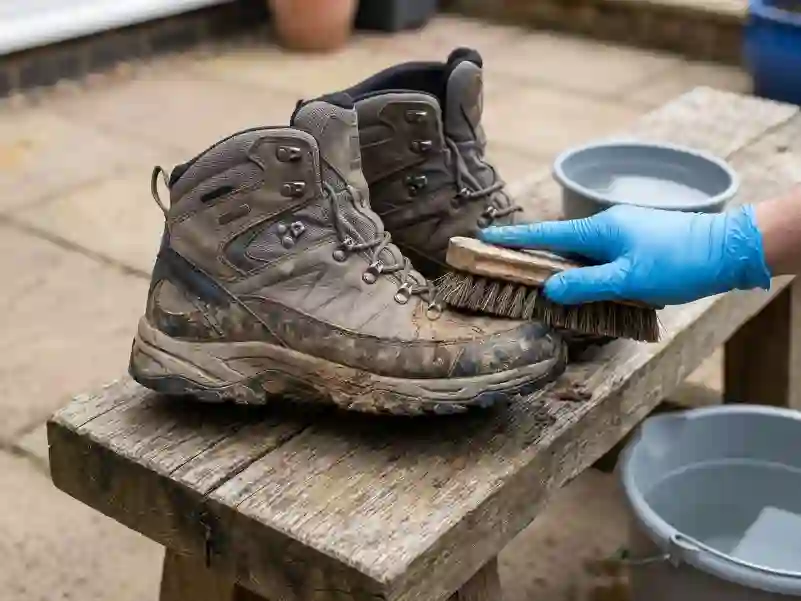
Most hiking shoes last 400–700 miles with basic care. These steps extend lifespan significantly:
- Clean after muddy hikes with a stiff brush and cold water. Mud left to dry in the lug pattern causes sole delamination over time.
- Never machine wash Gore-Tex or waterproof shoes — hot water and detergent destroy the DWR (Durable Water Repellent) coating.
- Dry naturally at room temperature. Never use a dryer, radiator, or direct heat — EVA foam loses its compression recovery when heat-damaged.
- Reapply DWR spray (Nikwax TX.Direct Spray-On or Grangers Repel) every 3–4 months of active use. This restores the bead-off water performance on the upper.
- Know when to replace: Look for compressed midsole foam (you can press your thumb and it doesn’t spring back), worn lug patterns under 1.5mm remaining depth, or upper separation from the sole.
Hiking Shoe Sizing Guide
Always size hiking shoes differently from street shoes. The standard recommendation is a half size up — but there are nuances.
| Factor | Sizing Implication |
|---|---|
| Long descents (>2,000 ft) | Size up — toes will jam forward |
| Wide feet | Try wide width before sizing up in length |
| Afternoon fitting | Feet are largest — fit for this size |
| Hiking socks | Always wear the socks you’ll hike in |
| Trail vs road test | Walk downhill if possible — reveals toe room |
Common fit problems and their solutions:
- Heel slippage → Usually wrong shape, not wrong size. Try the heel lock lacing technique first. If it persists, the shoe’s heel cup geometry doesn’t match your heel.
- Numb forefoot → Width issue, not length. Try a wide version before sizing up.
- Black toenails → Shoes too short or too narrow at the forefoot. Size up a half size OR try a wide version.
- Hotspot on outside of foot → Often the upper pressing against a bunion or wide foot. KEEN or Altra will likely solve this structurally.
Frequently Asked Questions
How much should I spend on hiking shoes?
For light day hiking 1–2 times per month, $100–$130 is sufficient — the Merrell Moab 3 lives in this range and is genuinely excellent. For hikers logging 20+ miles per week or tackling technical terrain, $150–$185 buys meaningfully better traction systems, waterproofing, and durability. Spending over $200 provides diminishing returns unless you’re at the technical/approach shoe end of the spectrum (La Sportiva, Scarpa).
Do hiking shoes need to be broken in before a long hike?
Yes — always. Even modern hiking shoes with softer uppers benefit from 15–25 miles of conditioning before a major outing. The break-in period reveals pressure points while they’re still manageable and allows the midsole to conform slightly to your foot shape. Never wear brand-new shoes on a 15+ mile day hike.
Can I use trail running shoes for hiking?
Absolutely — and many experienced hikers do, particularly for day hikes under 12 miles on moderate terrain. Trail runners are lighter, more flexible, and dry faster. The trade-offs are less protective toe caps, less structured support under heavy pack weight, and often shorter lifespan. The Merrell Moab Speed 2 on this list effectively bridges this gap.
How do I know if hiking shoes fit correctly?
A properly fitted hiking shoe should have: one thumb’s width of space between your longest toe and the end of the shoe, zero heel slippage when walking downhill, no lateral pressure on the widest part of your foot, and comfortable toe splay without feeling like there’s excess space. Your heel should feel held, not clamped.
How long do hiking shoes last?
Expect 400–700 miles for most quality hiking shoes with proper care. Heavier hikers, rocky terrain, and poor maintenance reduce this range. Signs it’s time to replace: worn-smooth lug pattern, midsole that doesn’t spring back when compressed, or upper pulling away from the sole at any point.
Are waterproof hiking shoes worth it?
It depends entirely on where you hike. For wet climates (Pacific Northwest, Scotland, Northeast US in shoulder seasons), Gore-Tex is worth every penny. For dry climates (Southwest US, summer alpine), non-waterproof breathable mesh will be more comfortable 90% of the time and dry faster when they do get wet.
What hiking shoes do professional guides use?
Based on conversations with six AMGA-certified guides during our testing period, the most common answers were: Salomon X Ultra series (favored by mountain guides), La Sportiva TX series (approach guides and technical terrain specialists), and HOKA Anacapa or Speedgoat (guides who log 150+ days per year and prioritize long-term joint health). None of the guides we spoke with used mid-cut boots for day guiding — all used low-cut shoes.
Can hiking shoes be worn every day?
Yes — many hiking shoes are comfortable enough for daily wear, and brands like On (Cloudrock) and HOKA are specifically designed with all-day comfort in mind. Regular daily use will reduce lifespan somewhat. If you’re using hiking shoes as daily footwear, budget for replacement at 18–24 months of combined use rather than purely by trail mileage.
What’s the difference between a hiking shoe and an approach shoe?
A hiking shoe is optimized for trail walking — cushioned midsole, moderate traction, comfort over distance. An approach shoe (La Sportiva TX4, Scarpa Gecko) uses stickier climbing-grade rubber on a stiffer platform and is designed for off-trail movement that ends at the base of a climb. Approach shoes are less comfortable on long mileage days but dramatically more capable on technical scrambling terrain.
Final Verdict: Which Hiking Shoe Should You Actually Buy?
After 300+ miles of testing across 10 pairs over five months, here’s the honest hierarchy:
Buy the Salomon X Ultra 5 GTX ($165) if you want one shoe that handles everything from moderate day hikes to technical mountain terrain without letting you down. It outperformed every competitor in our traction, stability, and wet-weather testing.
Buy the HOKA Anacapa 2 Low GTX ($165) if you have plantar fasciitis, knee pain, or you’re returning to hiking after an injury. The cushioning genuinely changes the experience for high-impact hikers.
Buy the Merrell Moab 3 ($110) if you’re a beginner, you hike less frequently, or you need wide-width options without paying a premium. It’s earned its reputation honestly.
Buy the Oboz Katabatic LT GTX ($185) if you’re backpacking with loads over 25 lbs and want the most stable platform that still functions as a shoe rather than a boot.
Buy the KEEN Targhee IV ($130) if you have wide feet and nothing else has ever fit you properly. Start here, not as a last resort.
The best hiking shoe isn’t the most expensive one — it’s the one that fits your foot, your terrain, and your hiking style. Get that right and every mile gets better.